How to perform test
CRP | Lansionbio
On this page
Video tutorial for hs-CRP/CRP by Lansionbio
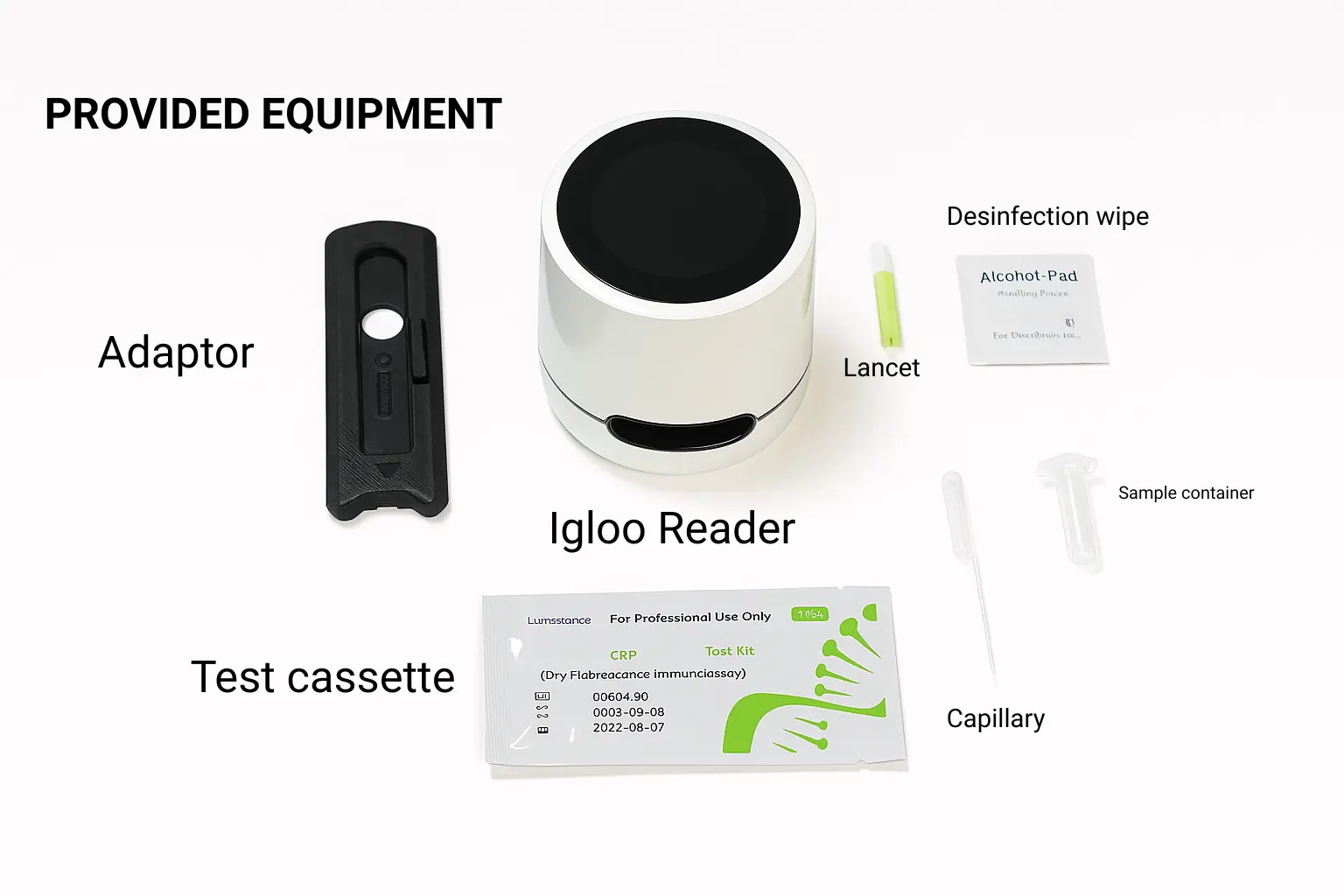
Supplies overview
- 1x CRP Test Cassette
- 1x 5-100µL Pipette / Capillary
- 1x Sterile Lancet
- 1x Desinfection wipe
- 1x Buffer Solution Tube
- 1x Igloo Reader
- 1x Lansionbio Adapter
- 1x CRP Test Cassette
- 1x Fixed-Volume Capillary Pipette
- 1x Buffer Solution Tube
Additionally needed to perform test:
- 1x Sterile Lancet
- 1x Desinfection wipe
- 1x Igloo Reader
- 1x Lansionbio Adapter
Text instructions
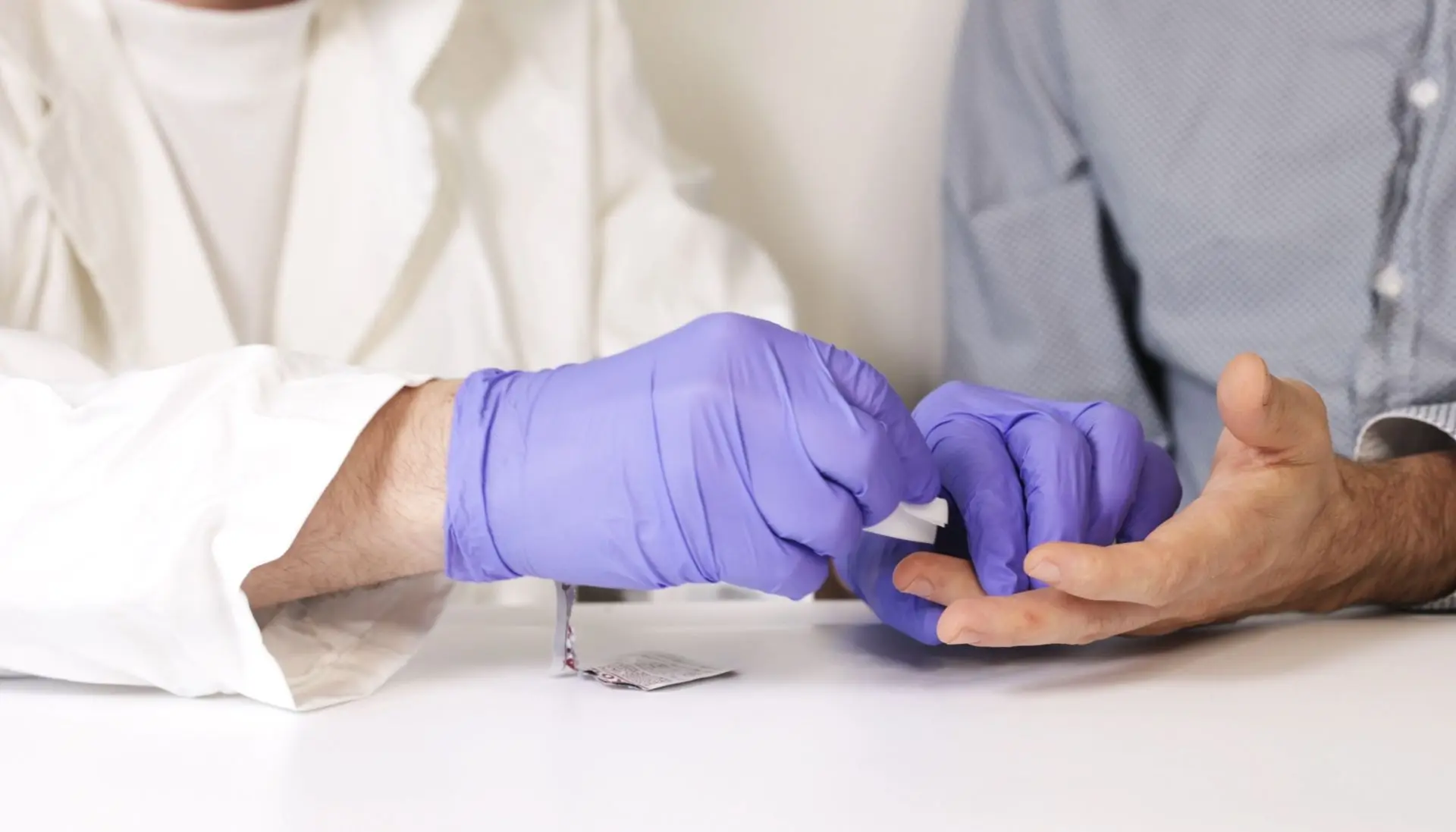
STEP 1: Prepare and Disinfect the Sampling Area
Lay out all kit components. Disinfect the fingertip with the alcohol swab and let it dry.
Warm hands make blood sampling easier! Allow the test subject to warm their hands beforehand with a warm cloth, warm water, or by gently rubbing their hands together.
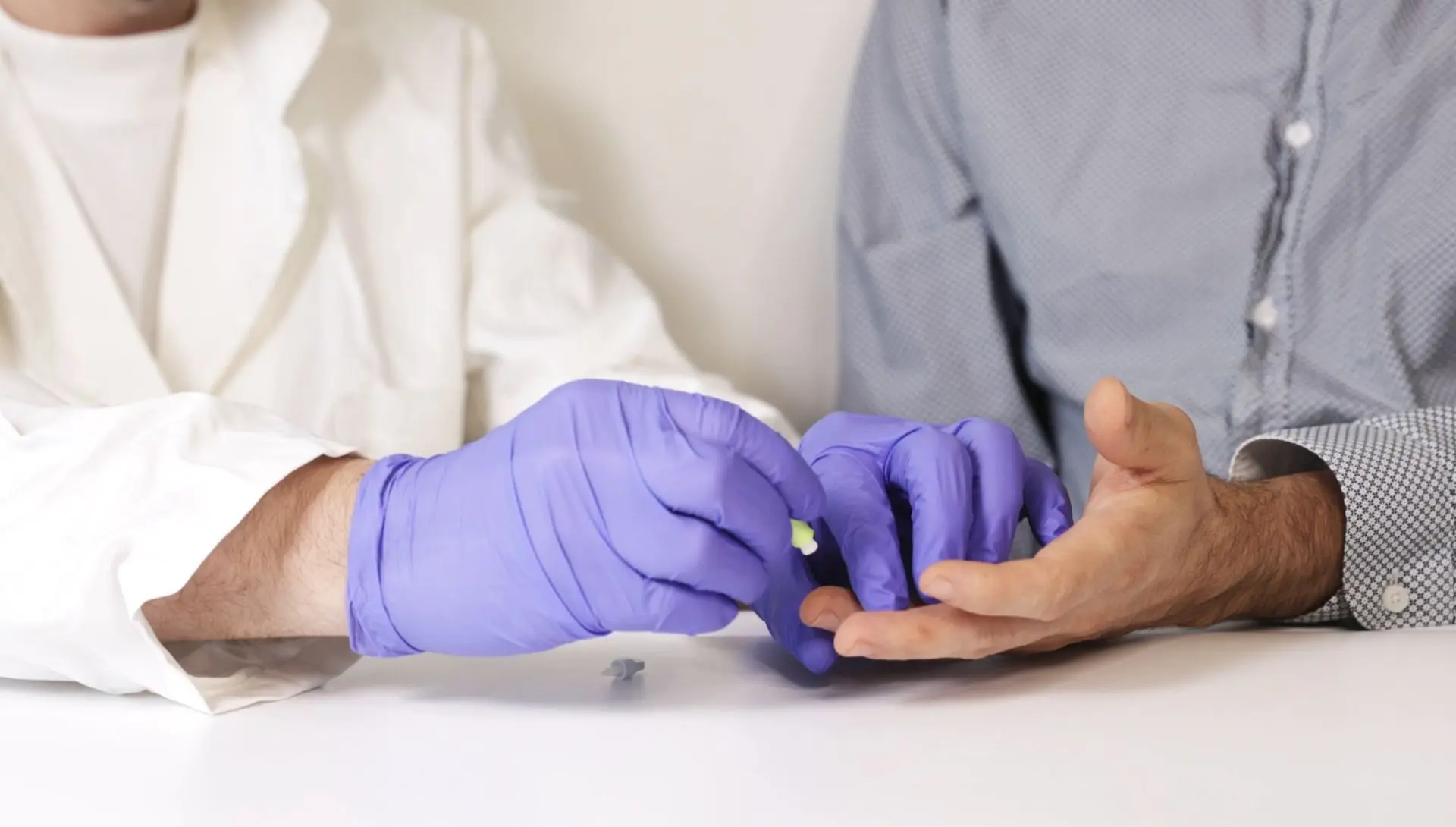
STEP 2: Perform a Fingerstick
Use the sterile lancet to puncture the side of the fingertip. Gently massage the finger to form a blood drop.
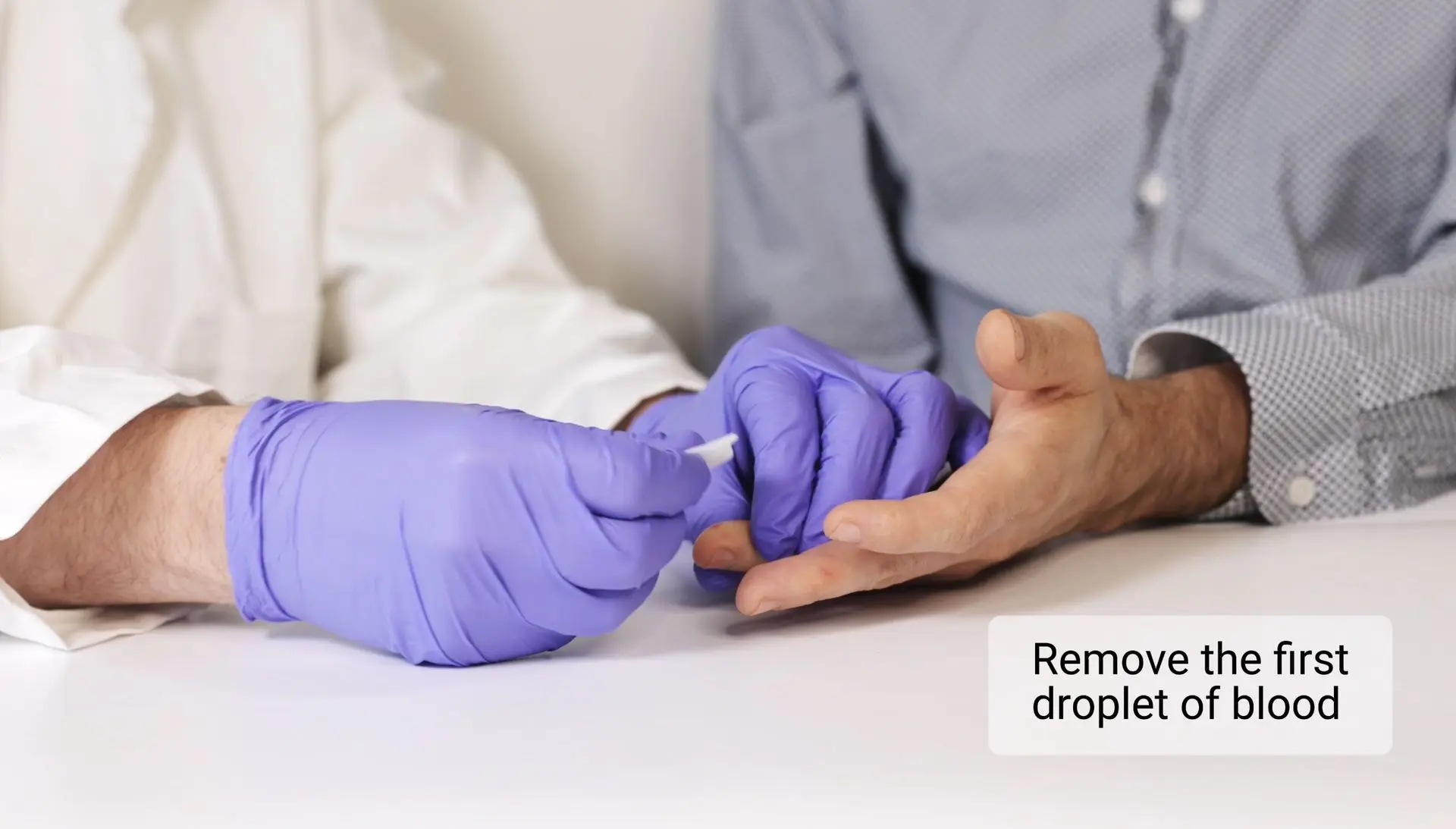
STEP 3: Remove the first droplet of blood
Wipe away the first drop of blood with a sterile swab before collecting the sample. This ensures accuracy and prevents contamination.
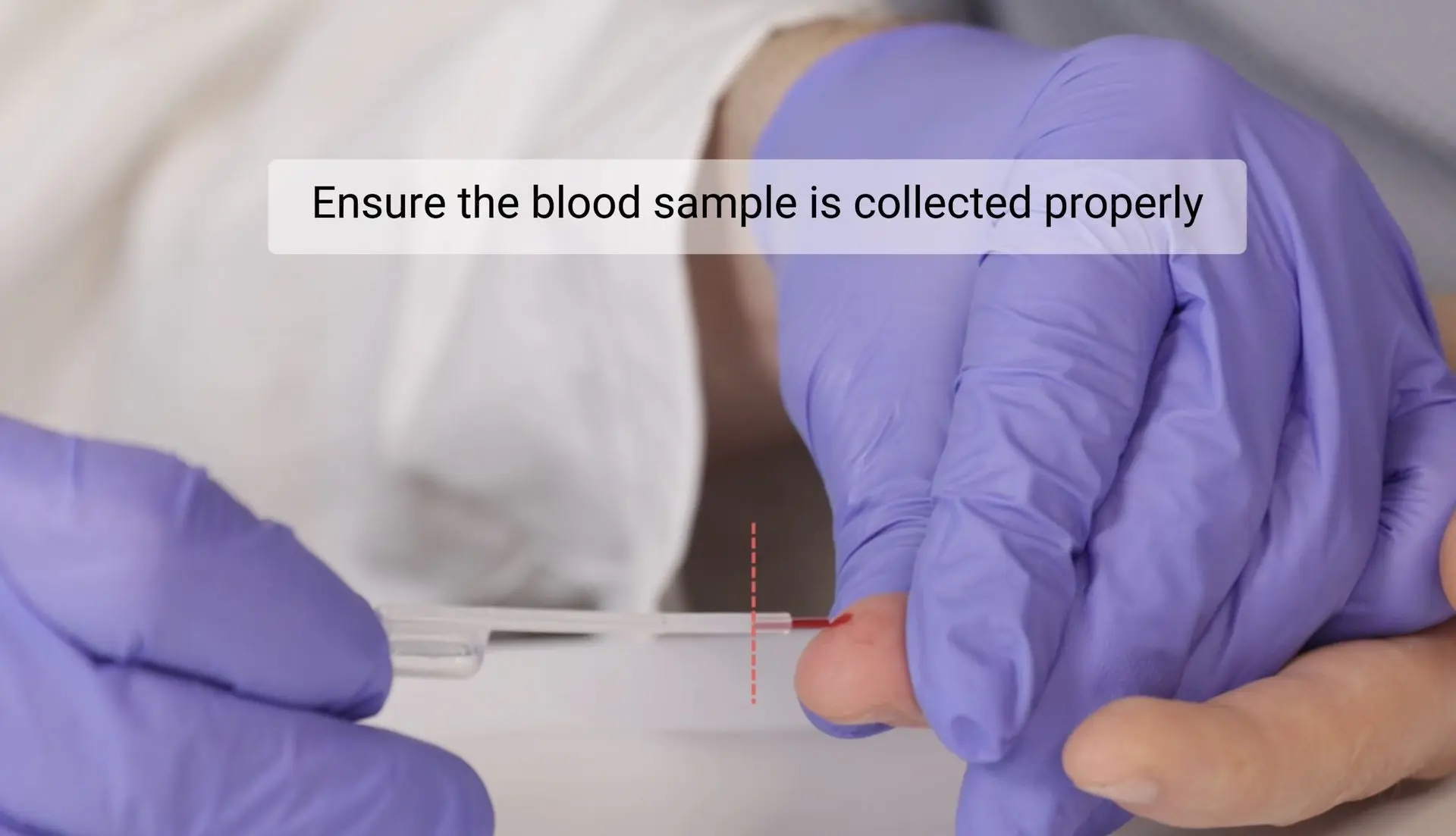
STEP 4: Collect exactly 5 µL of blood
The blood will fill the pipette automatically by capillary action. The small inserted tube at the end of the pipette corresponds to the correct sample volume.
Important: Ensure the blood sample is collected properly.
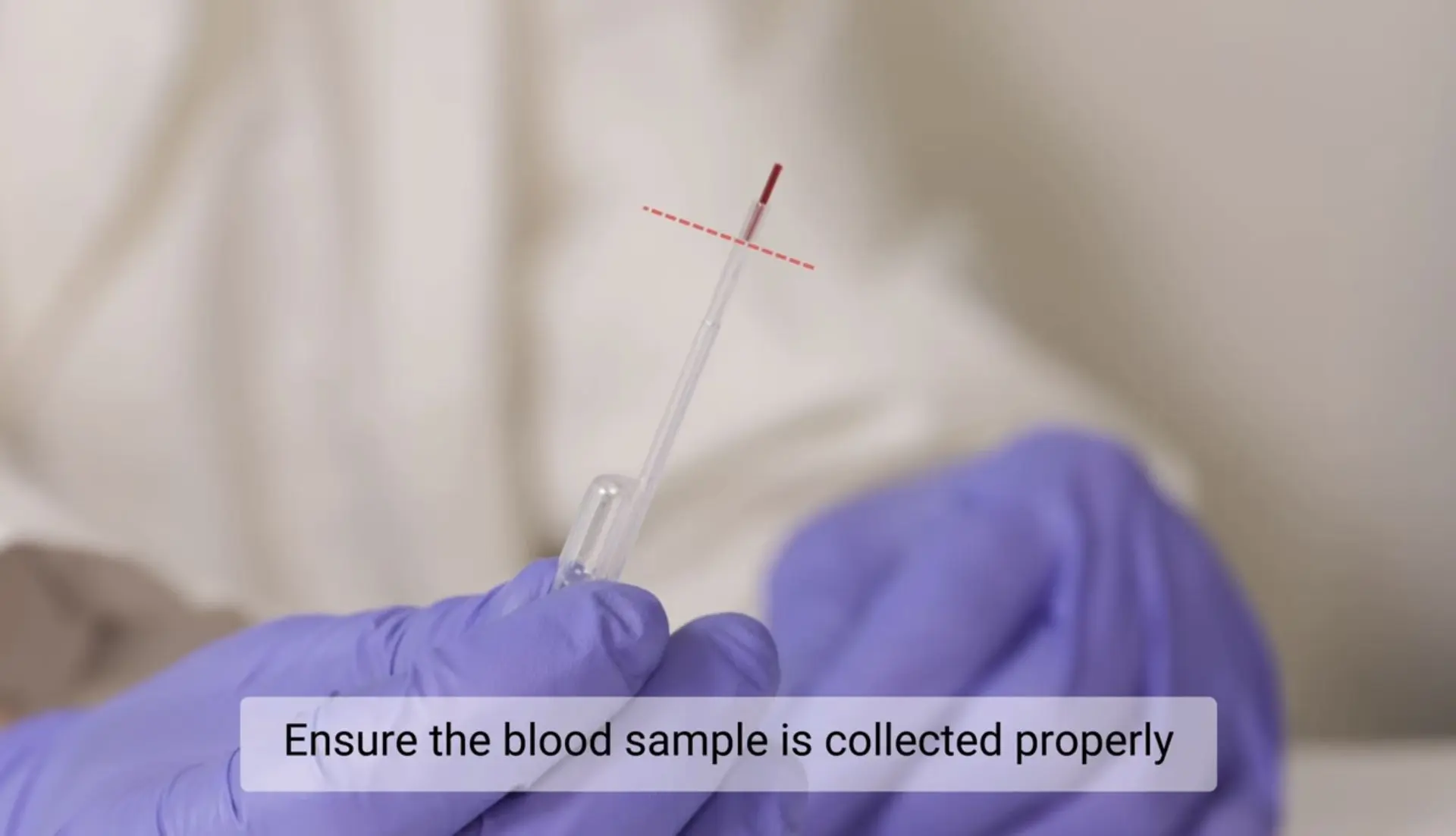
Important
Handle the pipette gently. Use only the top part when drawing up or releasing liquid.
Hold the upper part of the pipette and avoid squeezing too hard to ensure accurate volume and prevent air bubbles.
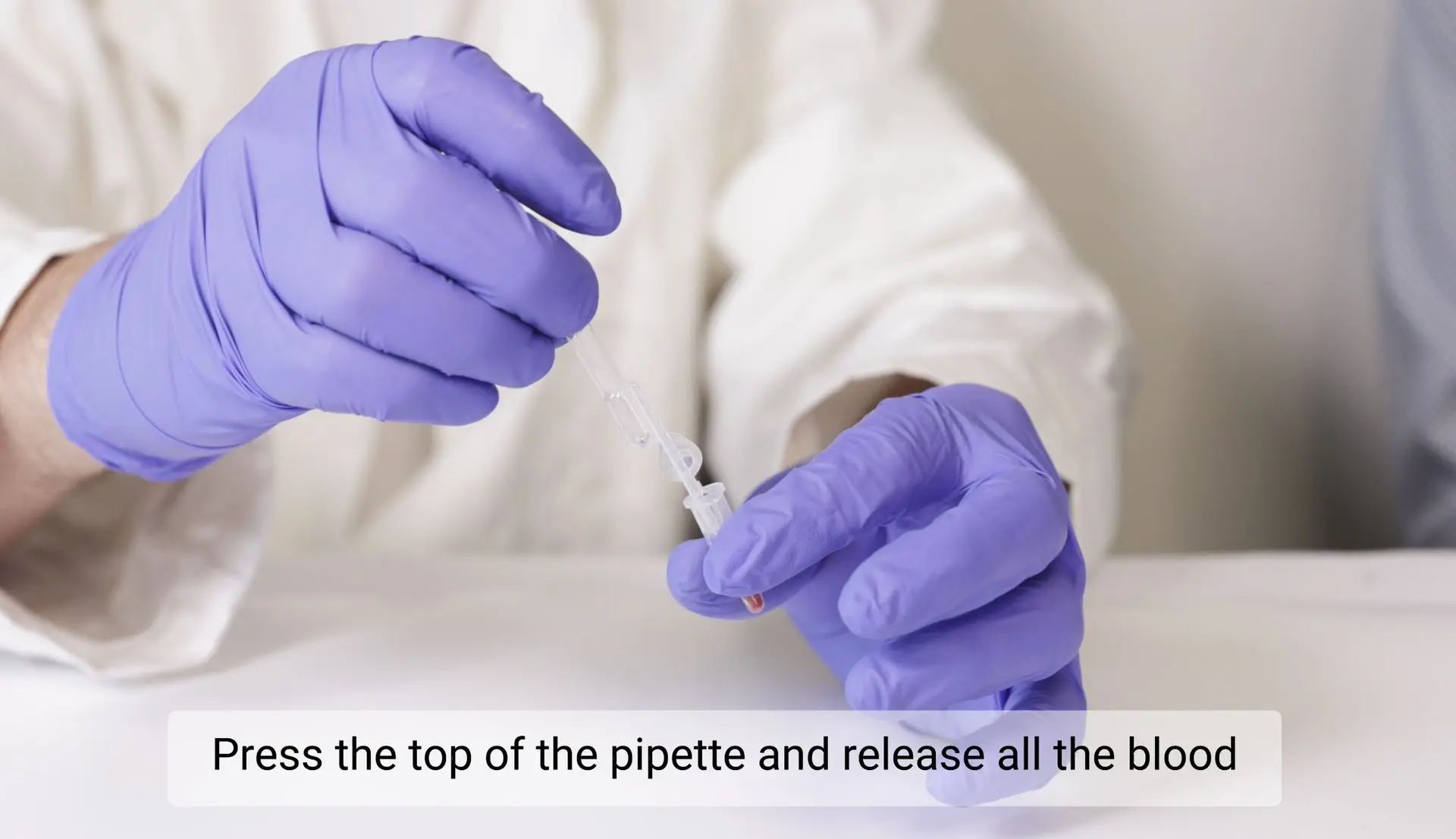
STEP 5: Transfer Blood into Buffer
Gently press only the top of the pipette to release the entire blood sample into the buffer tube for proper mixing. To deliver sample from the pipette completely, gently absorb and release some buffer solution.
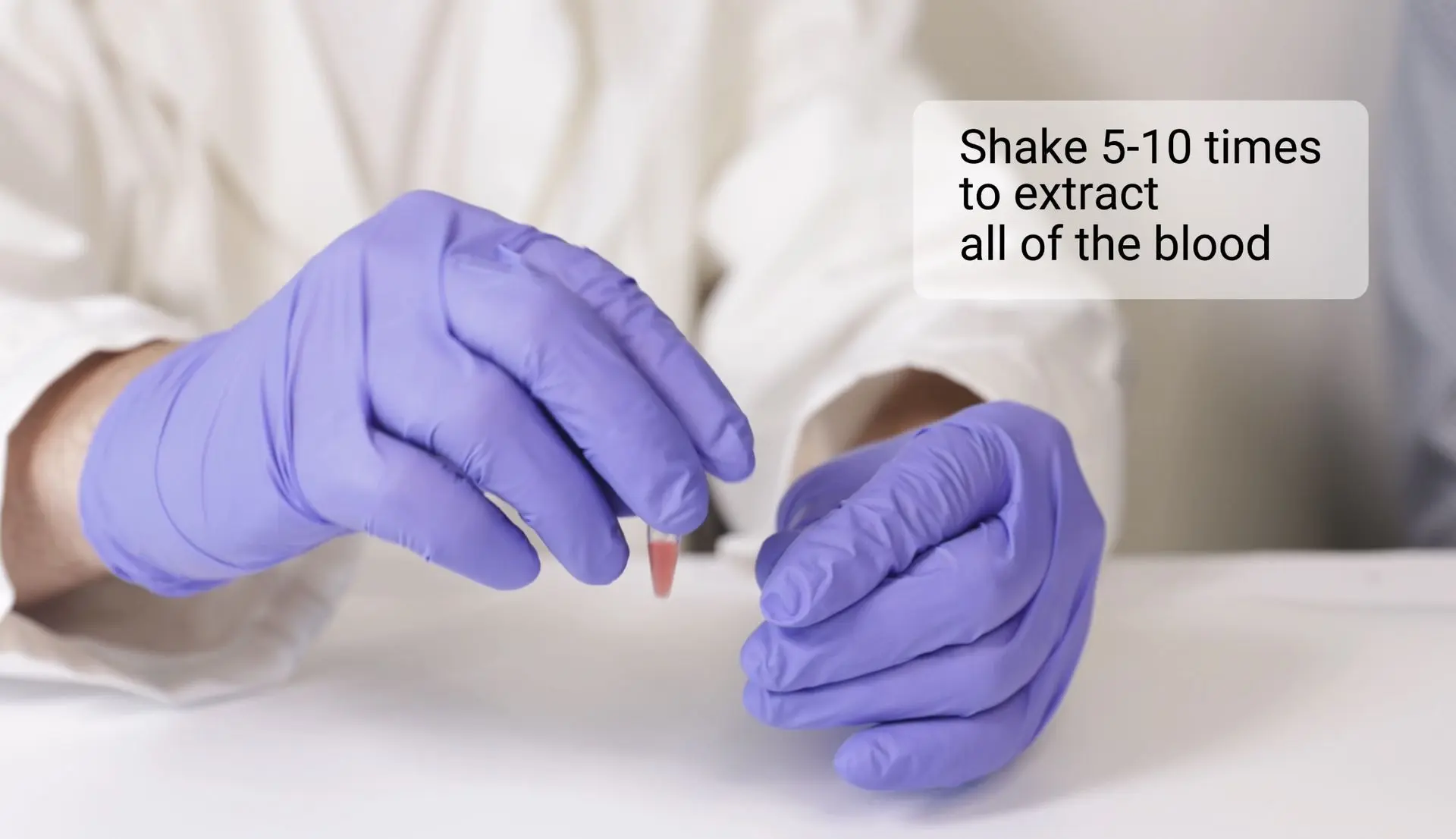
STEP 6: Mix the blood with the buffer
Shake 5–10 times to ensure proper mixing.
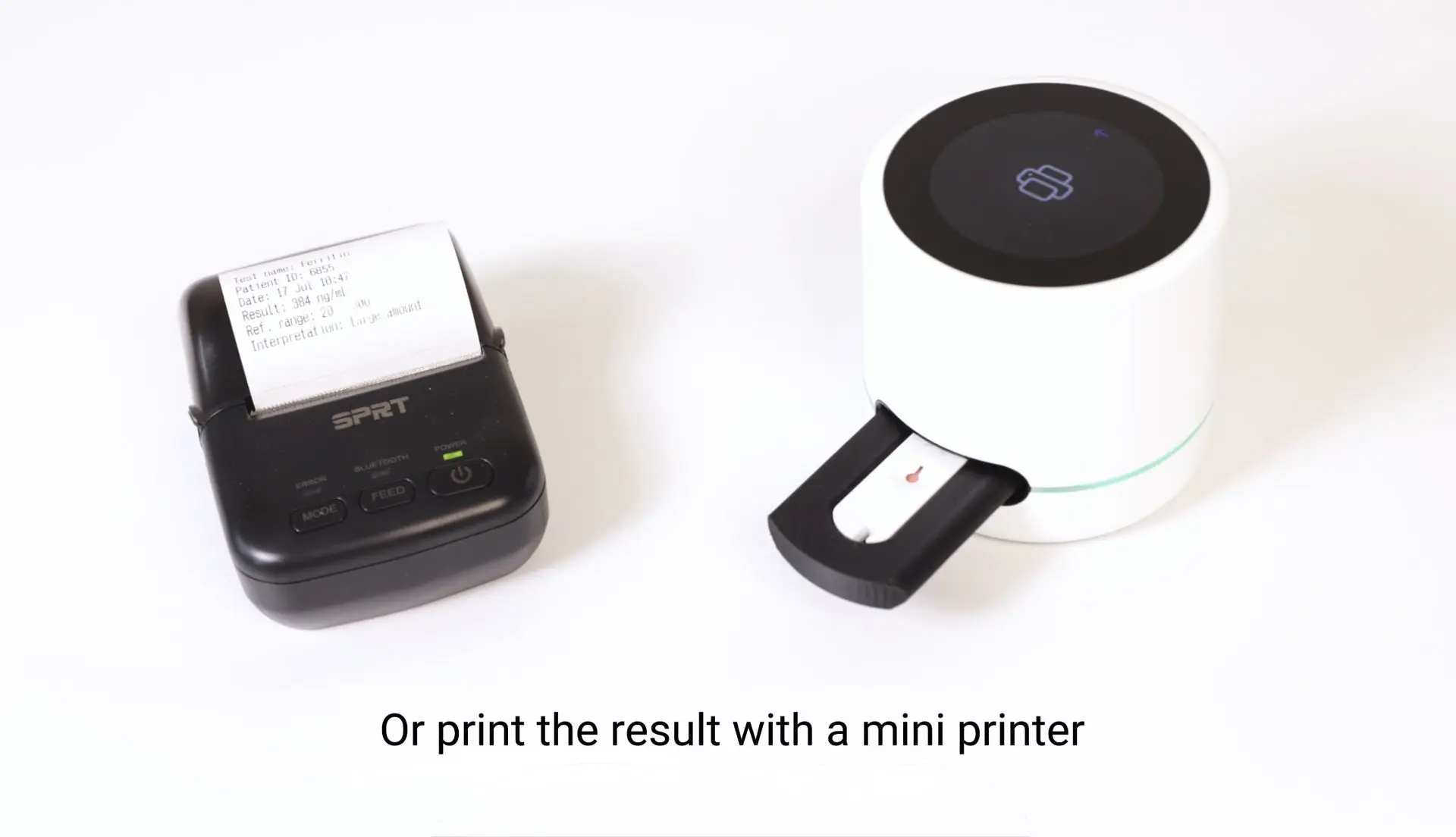
Or print the result with a mini printer
Result is ready
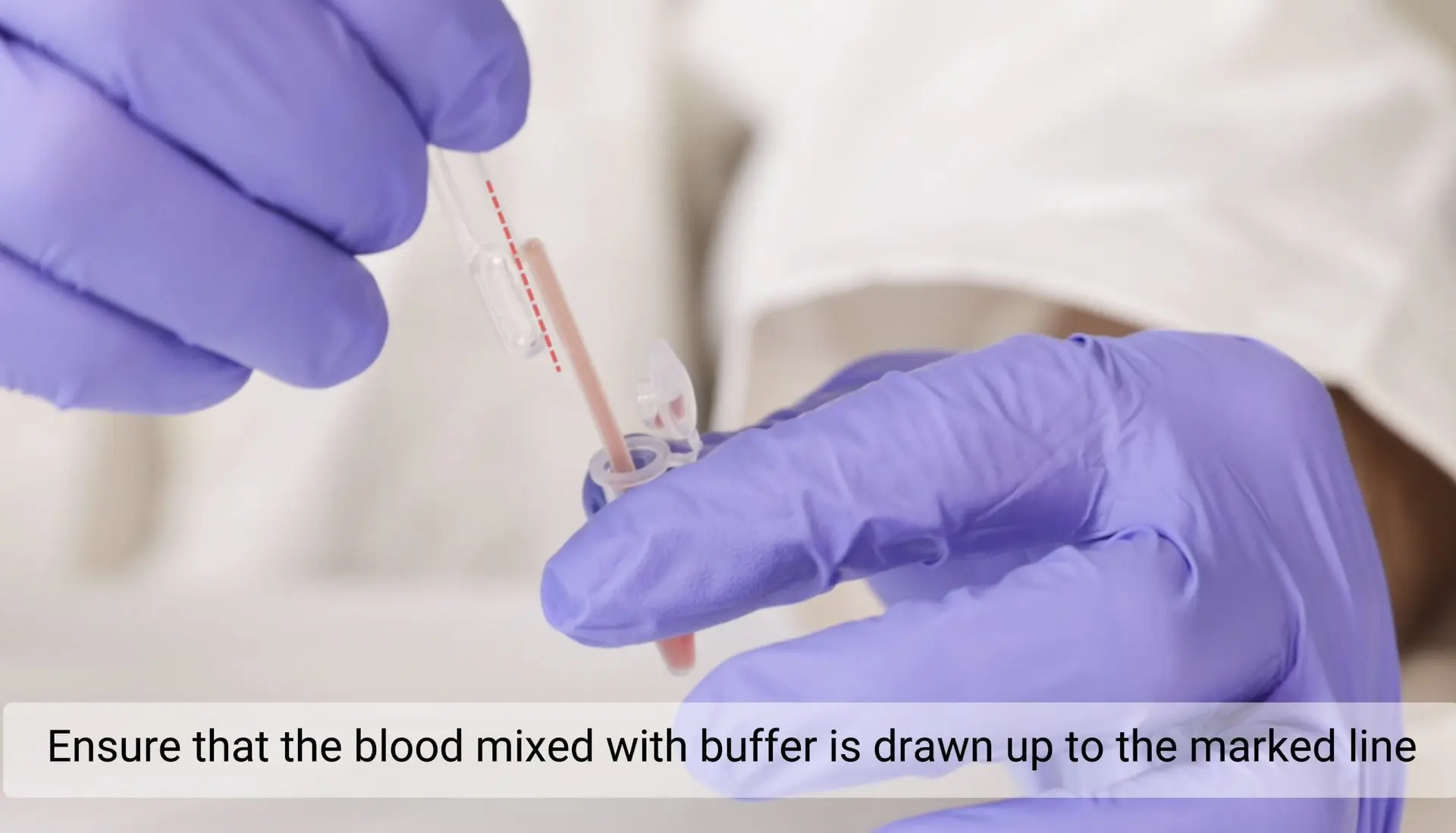
STEP 7: Collect 100 µL of the mixed blood and buffer solution
Gently press the top of the pipette to collect the mixed blood and buffer up to the indicated mark.
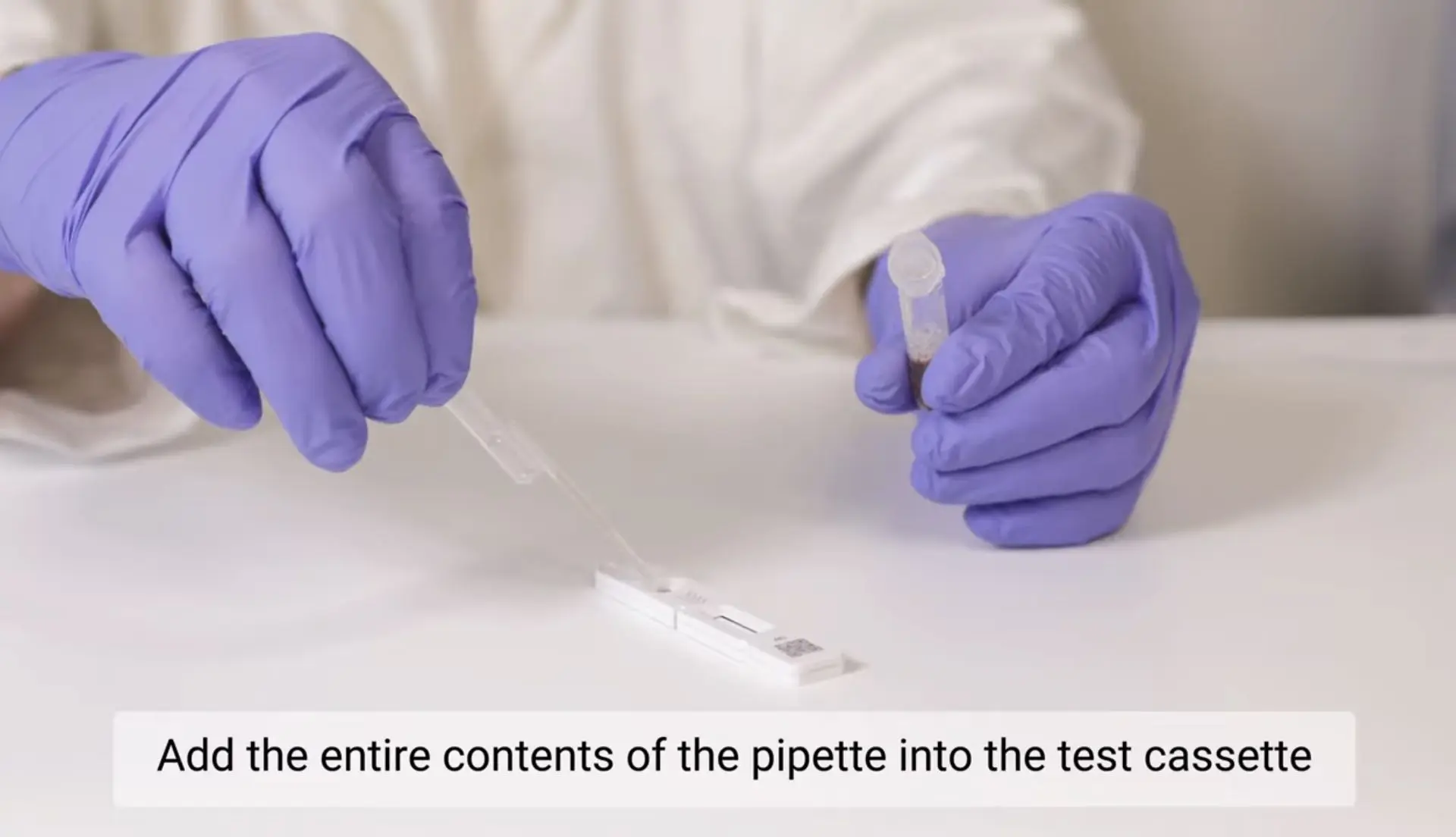
Transfer the full volume from the pipette into the test cassette.
STEP 9: Start using the device
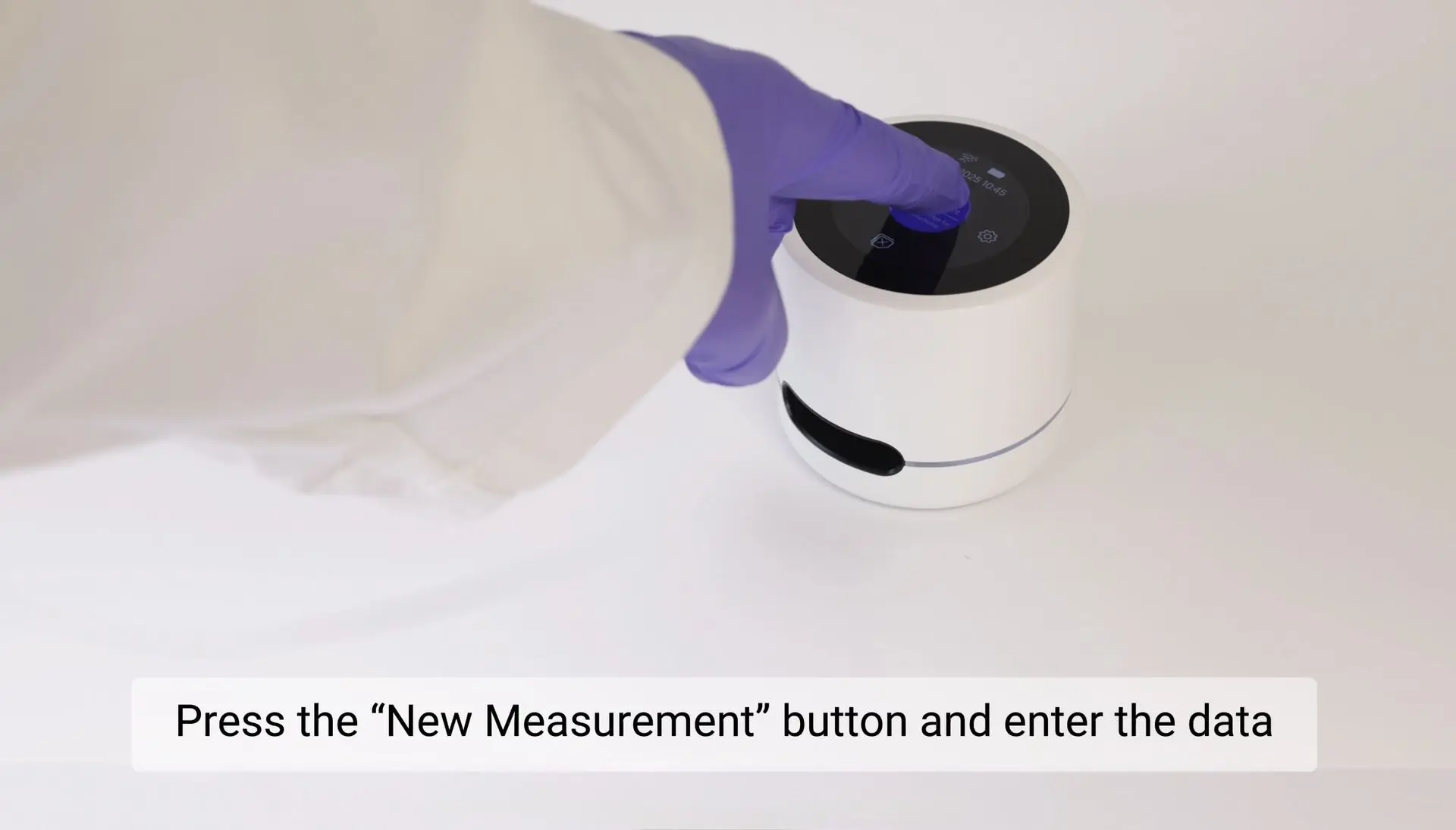
Turn on the device using the power button located underneath.
Once the device is on, press “New Measurement” and enter the required data to begin the test.
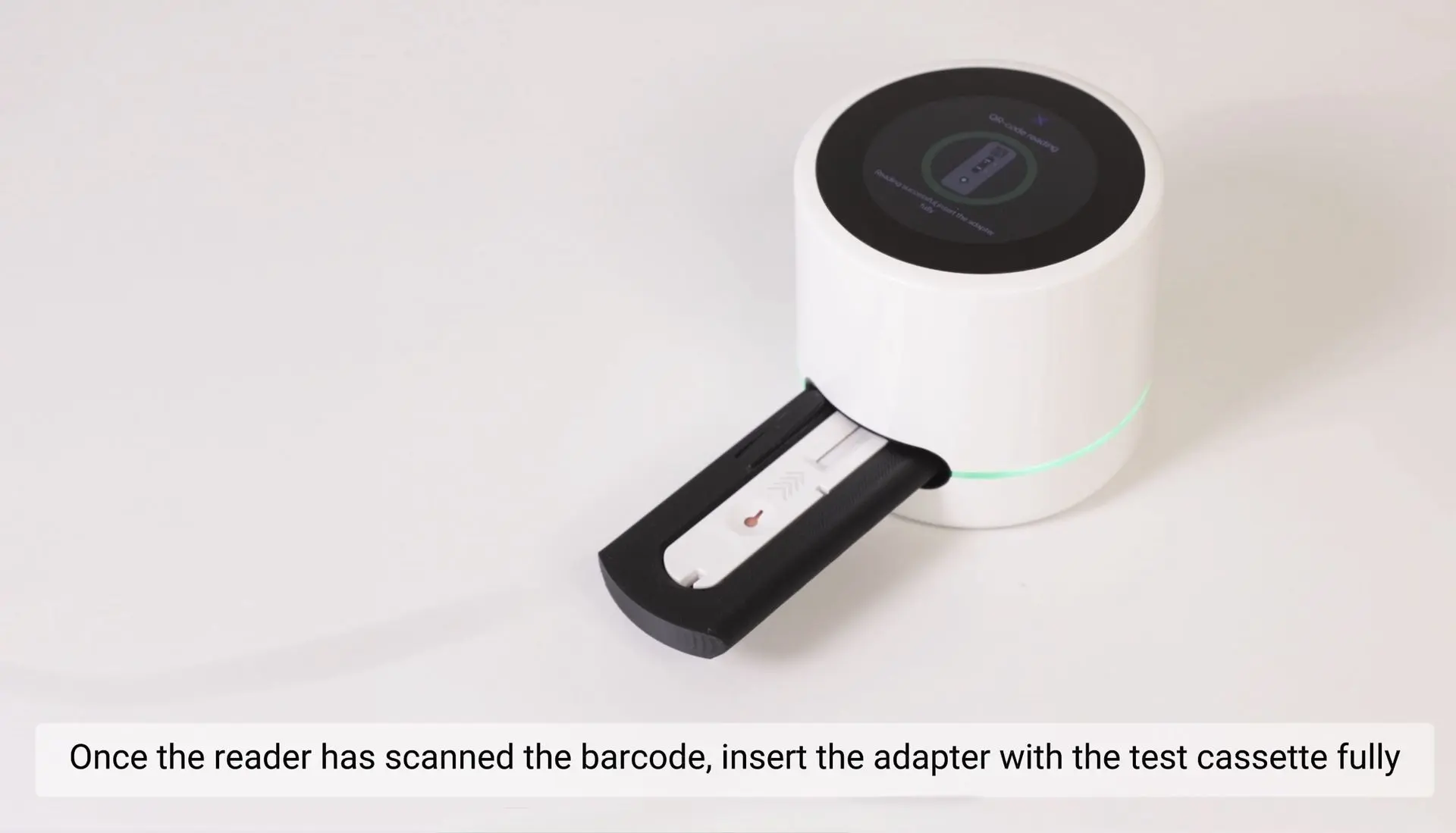
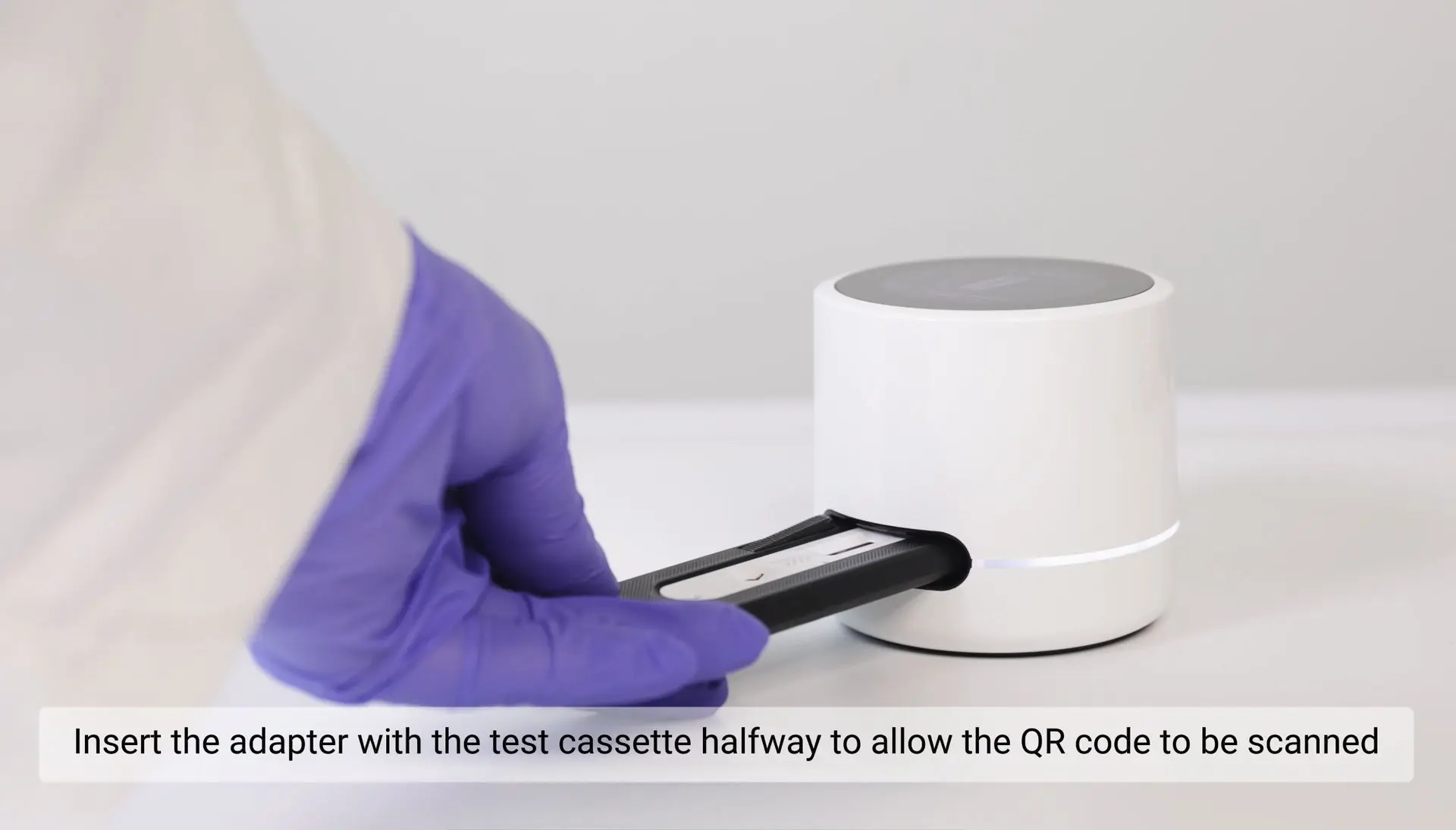
STEP 10: Insert the test cassette halfway into the reader
Insert the test cassette halfway into the reader to enable QR code scanning. Wait until the reader completes the scan and the green indicator light turns on.
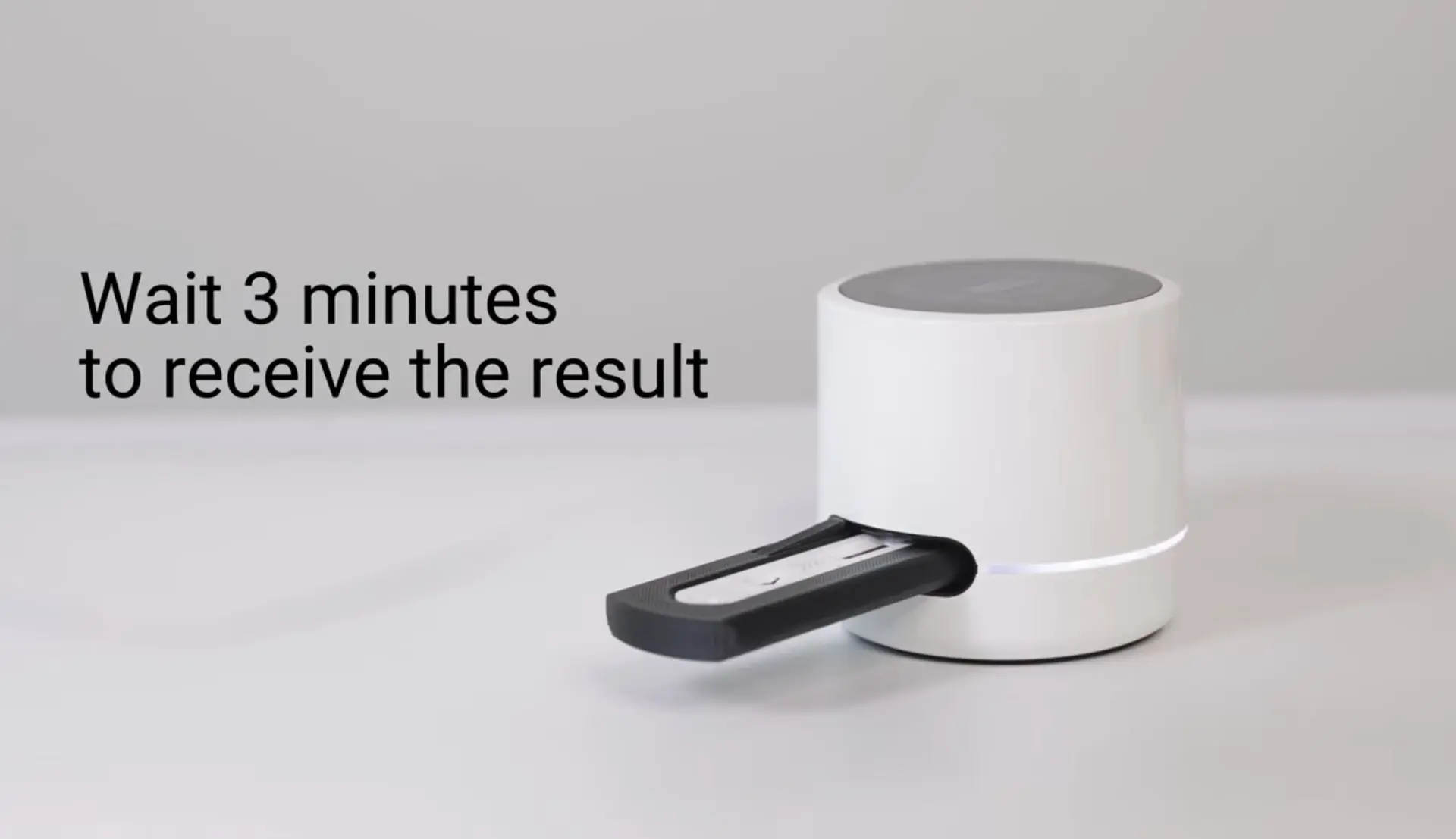
Once the indicator light turns green, insert the test cassette completely to start the measurement.
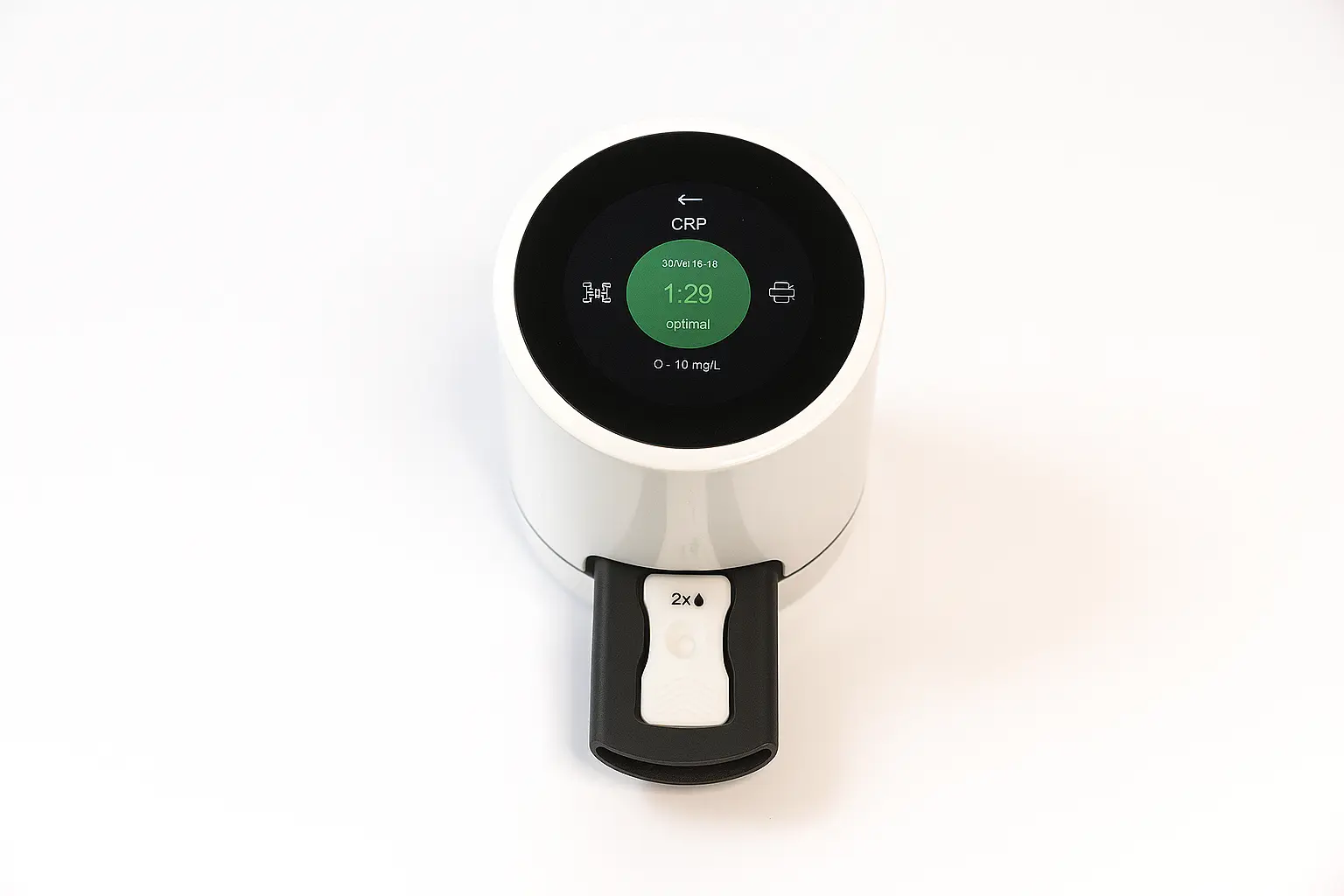
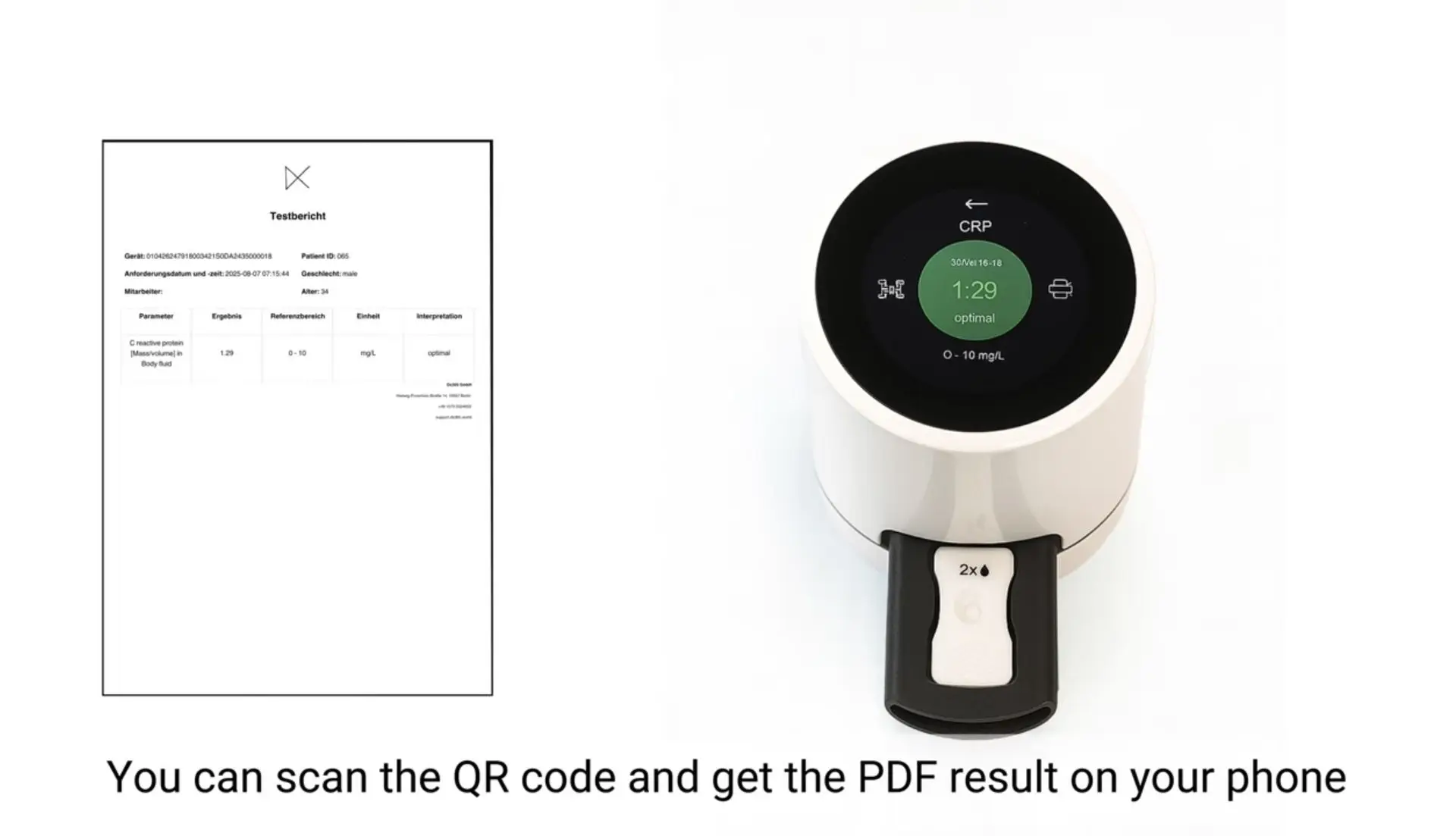
STEP 12: Wait 3 minutes
Scan QR for quick results on your phone in PDF form
Results evaluation
Rapid hs-CRP/CRP tests may differ slightly from laboratory results - this is normal and does not indicate a faulty device. Use the following ranges to explain results clearly to customers and guide appropriate next steps. Reference ranges may vary slightly by lab and test method.
Result: Error / No control line
What it means: Test did not run correctly.
How to explain/action: Repeat the test. If the issue persists, check sample and instructions.
Result: 0 - 1 mg/L
What it means: Low risk, low inflammation - indicates low risk for cardiovascular disease.
How to explain/action: Reassure customer, suggest to maintain healthy lifestyle and routine health monitoring.
Result: 1 – 3 mg/L
What it means: Average risk, moderate inflammation - average risk for cardiovascular disease.
How to explain/action: Recommend healthy lifestyle changes and follow-up testing as well as consultation with a healthcare provider.
Result: > 3 mg/L
What it means: High risk, elevated inflammation - higher risk for cardiovascular disease or active inflammation/infection.
How to explain/action: Advise customer to consult healthcare provider for further evaluation and possible additional testing.
Key points to keep in mind:
Point-of-care results can differ slightly from lab tests. Small variations are common and do not mean the device is faulty.
If you see an error or no control line, the test might not have worked - always repeat.
For borderline or unusual values, advise customers to seek follow-up testing and medical advice instead of assuming device problems.
Ferritin levels can rise more slowly and stay elevated longer during inflammation compared to CRP. While CRP peaks early and drops quickly as inflammation resolves, ferritin may remain high even after CRP returns to normal. This is normal and should be considered when interpreting ferritin results.
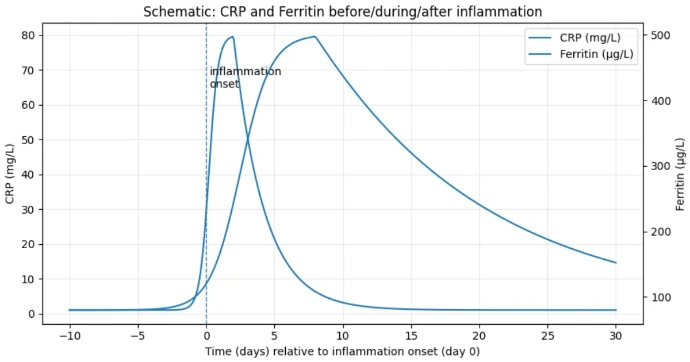
Read more about hs-CRP, ferritin, and about results evaluation.
Disposal instructions
- Dispose of used cassettes, pipettes, and lancets as biohazardous waste.
- Do not reuse any test components.
- Reader and adapter are reusable; clean according to the official maintenance guide.
Literature
Mayo clinic - C-reactive protein test
Medline Plus - C-reactive protein
- Testing - hs-CRP Test (C-Reactive Protein High-Sensitivity)
- Agency for Healthcare Research and Quality (AHRQ) - Assessing Cardiovascular Risk: Guideline Synthesis
- Beyhoff N et al. Prognostic Impact of High-Sensitivity C-Reactive Protein in Patients Undergoing Percutaneous Coronary Intervention According to BMI. J Am Coll Cardiol Intv. 2020 Dec, 13 (24) 2882–2892.https://doi.org/10.1016/j.jcin.2020.09.024
Disclaimer
This information is educational and does not qualify for a medical advice. Always use local reference ranges and consult a healthcare professional for diagnosis and treatment.