How to perform test
Testosterone | Unimed
Video tutorial for Testosterone by Unimed
*text instructions below
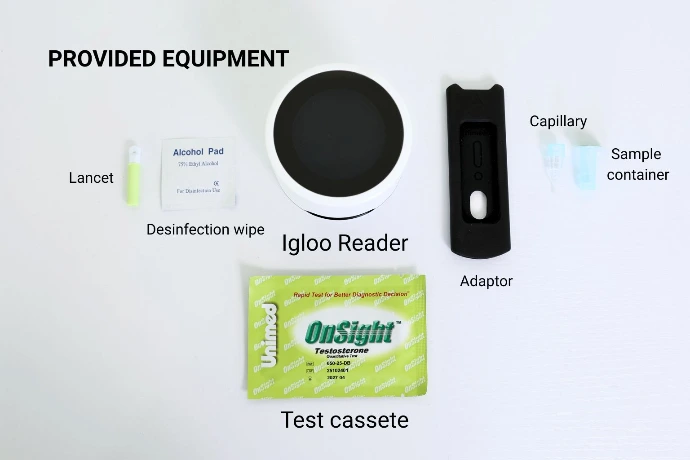
Supplies overview
- 1x Testosterone Test Cassette
- 1x Fixed-Volume Capillary Pipette
- 1x Sterile Lancet
- 1x Desinfection wipe
- 1x Buffer Solution Tube
- 1x Igloo Reader
- 1x Unimed Adapter
- 1x Testosterone Test Cassette
- 1x Fixed-Volume Capillary Pipette
- 1x Buffer Solution Tube
Additionally needed to perform test:
- 1x Sterile Lancet
- 1x Desinfection wipe
- 1x Igloo Reader
- 1x Unimed Adapter
Text instructions
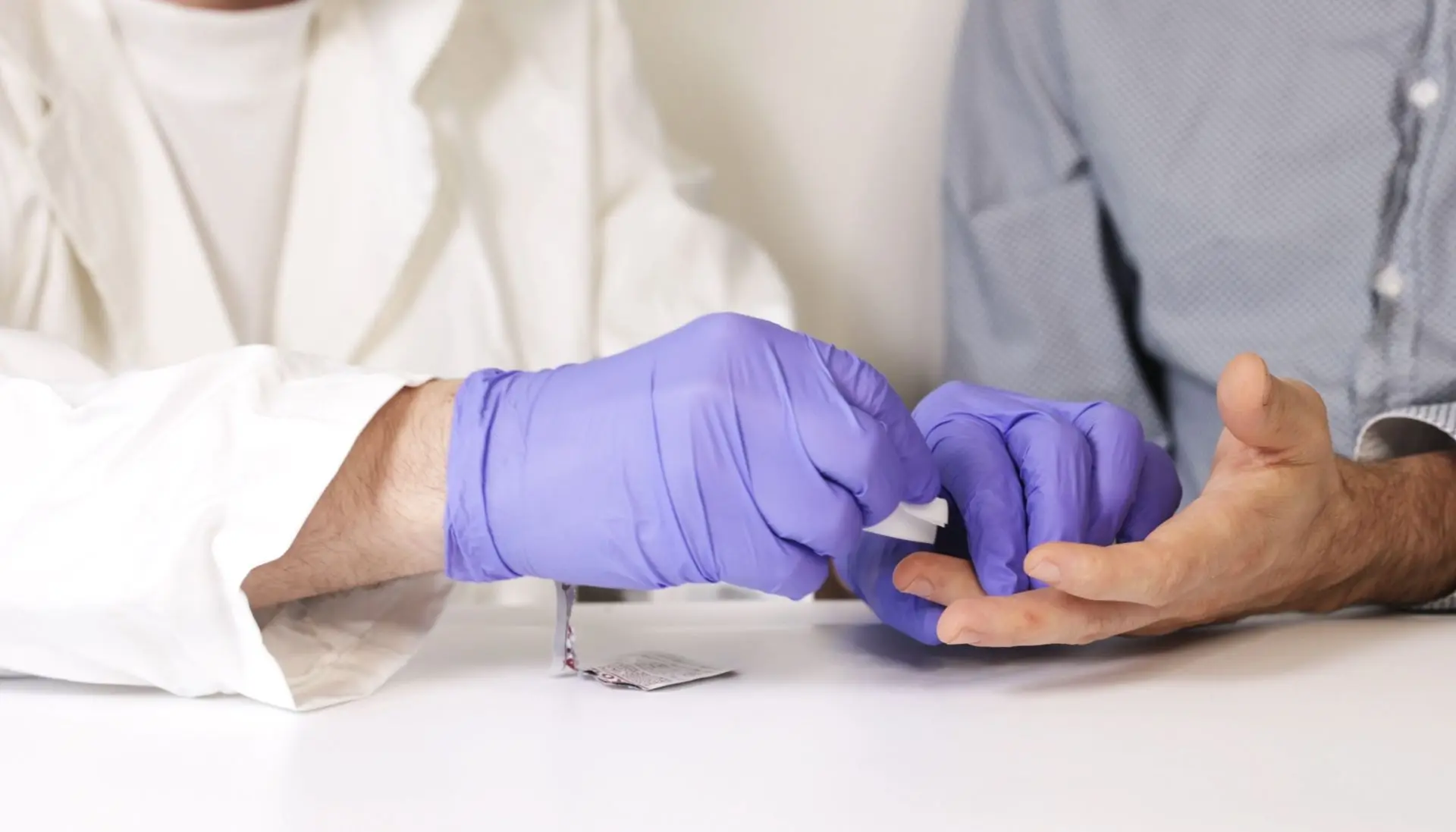
STEP 1: Prepare and Disinfect the Sampling Area
Lay out all kit components. Disinfect the fingertip with the alcohol swab and let it dry.
Warm hands make blood sampling easier! Allow the test subject to warm their hands beforehand with a warm cloth, warm water, or by gently rubbing their hands together.
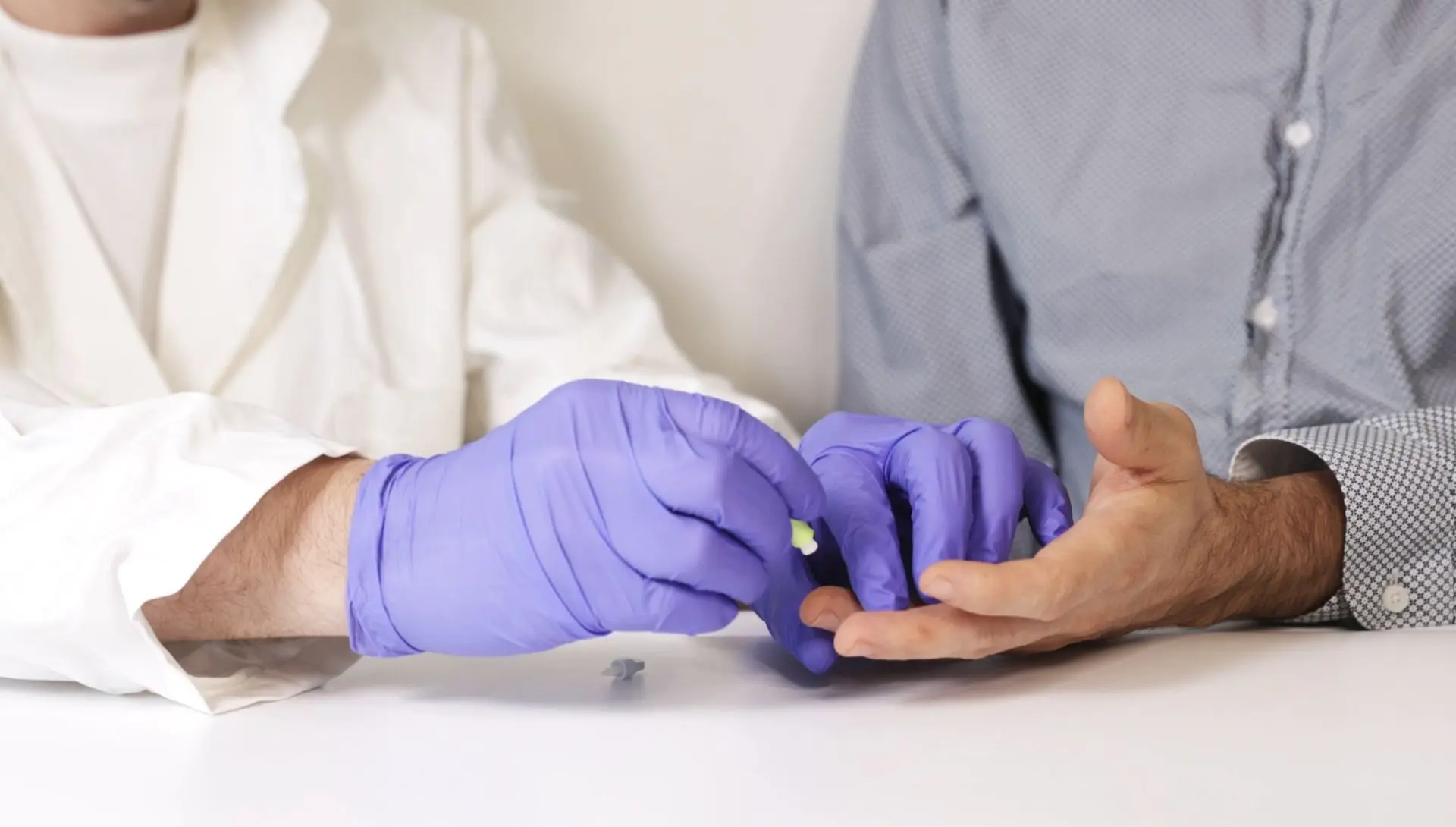
STEP 2: Perform a Fingerstick
Use the sterile lancet to puncture the side of the fingertip. Gently massage the finger to form a blood drop.
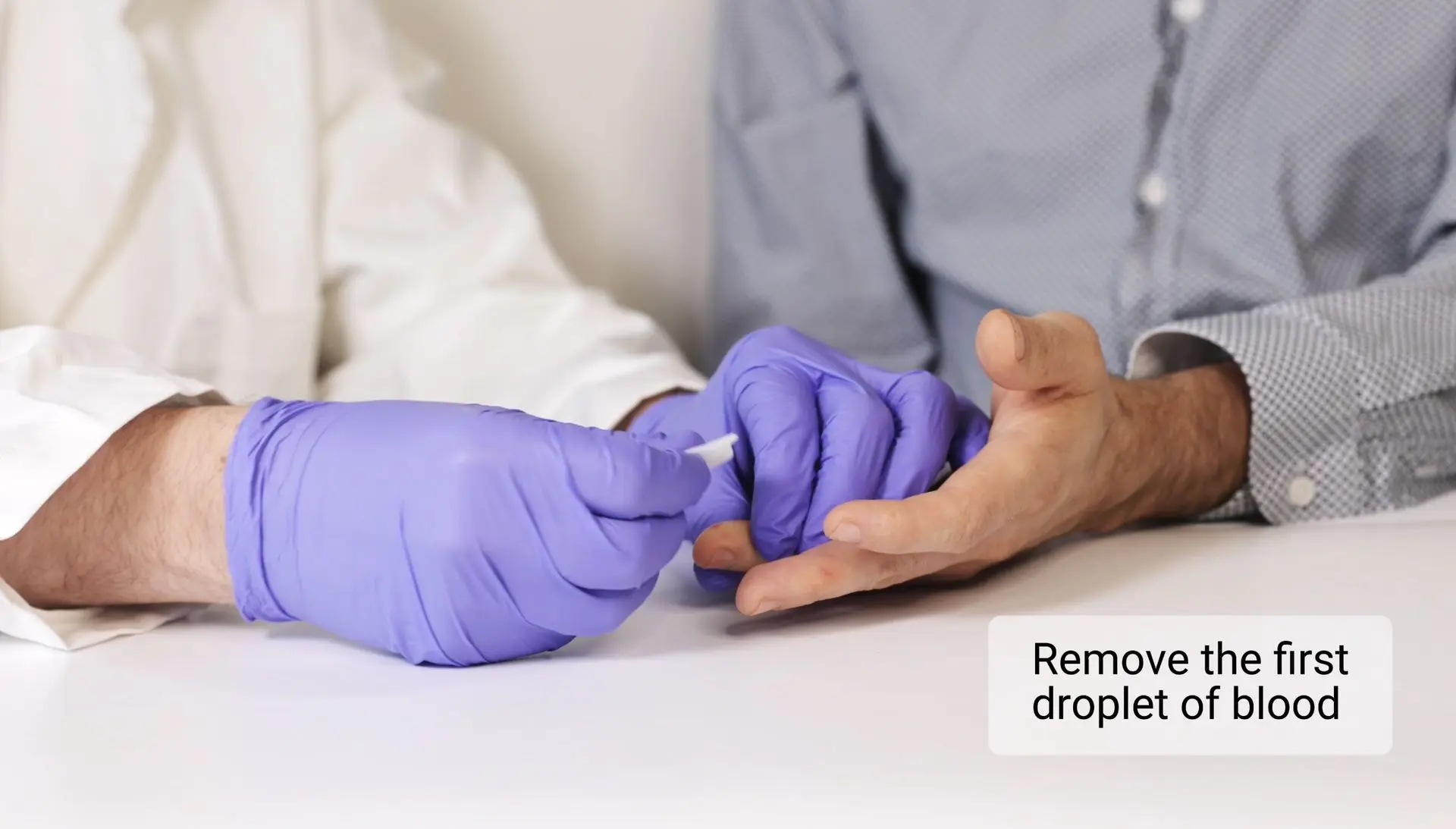
STEP 3: Remove the first droplet of blood
Wipe away the first drop of blood with a sterile swab before collecting the sample. This ensures accuracy and prevents contamination.
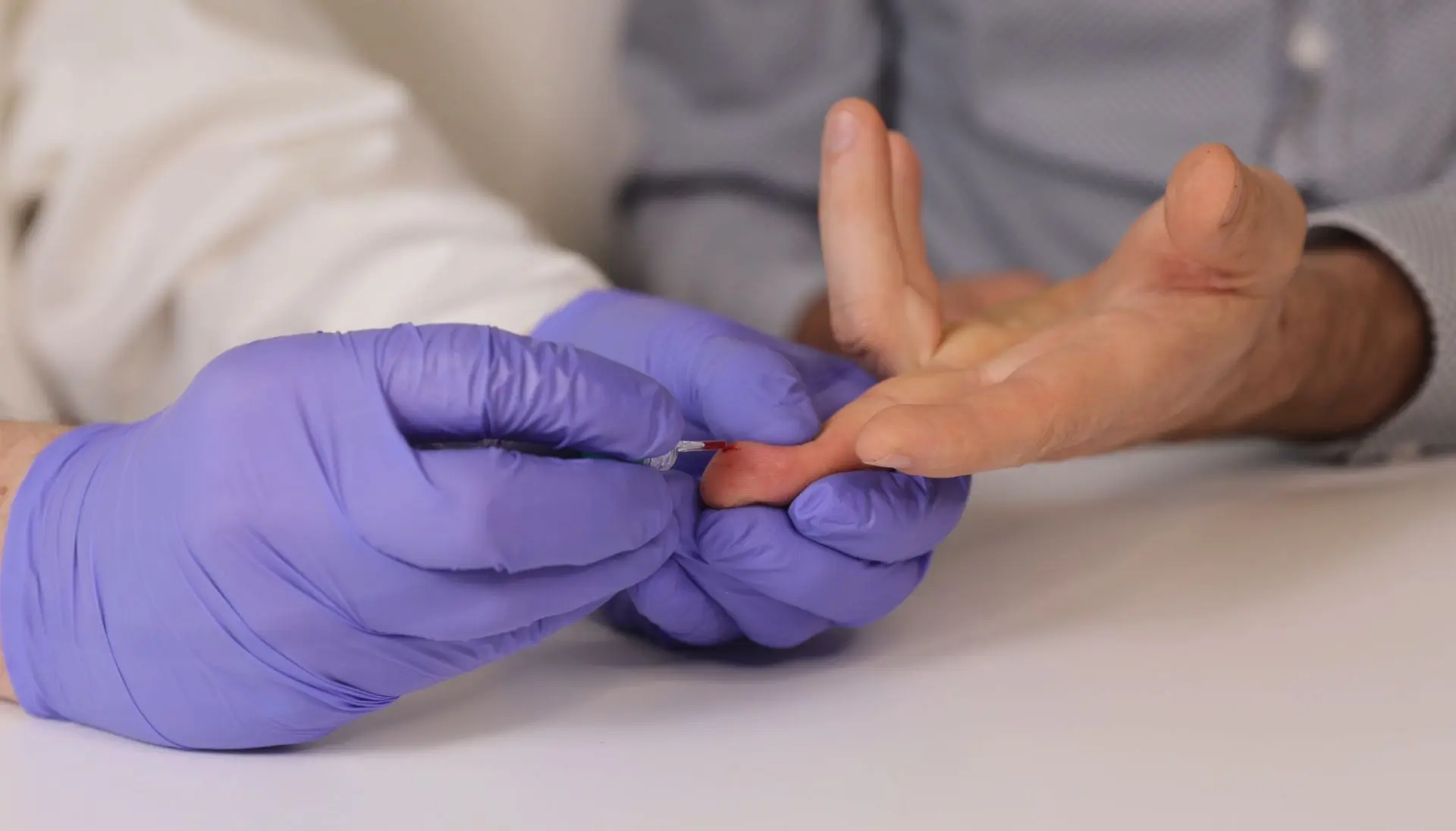
STEP 4: Collect exactly 10 µL of blood
The blood will fill the pipette automatically by capillary action.
Important: Ensure the blood sample is collected properly.
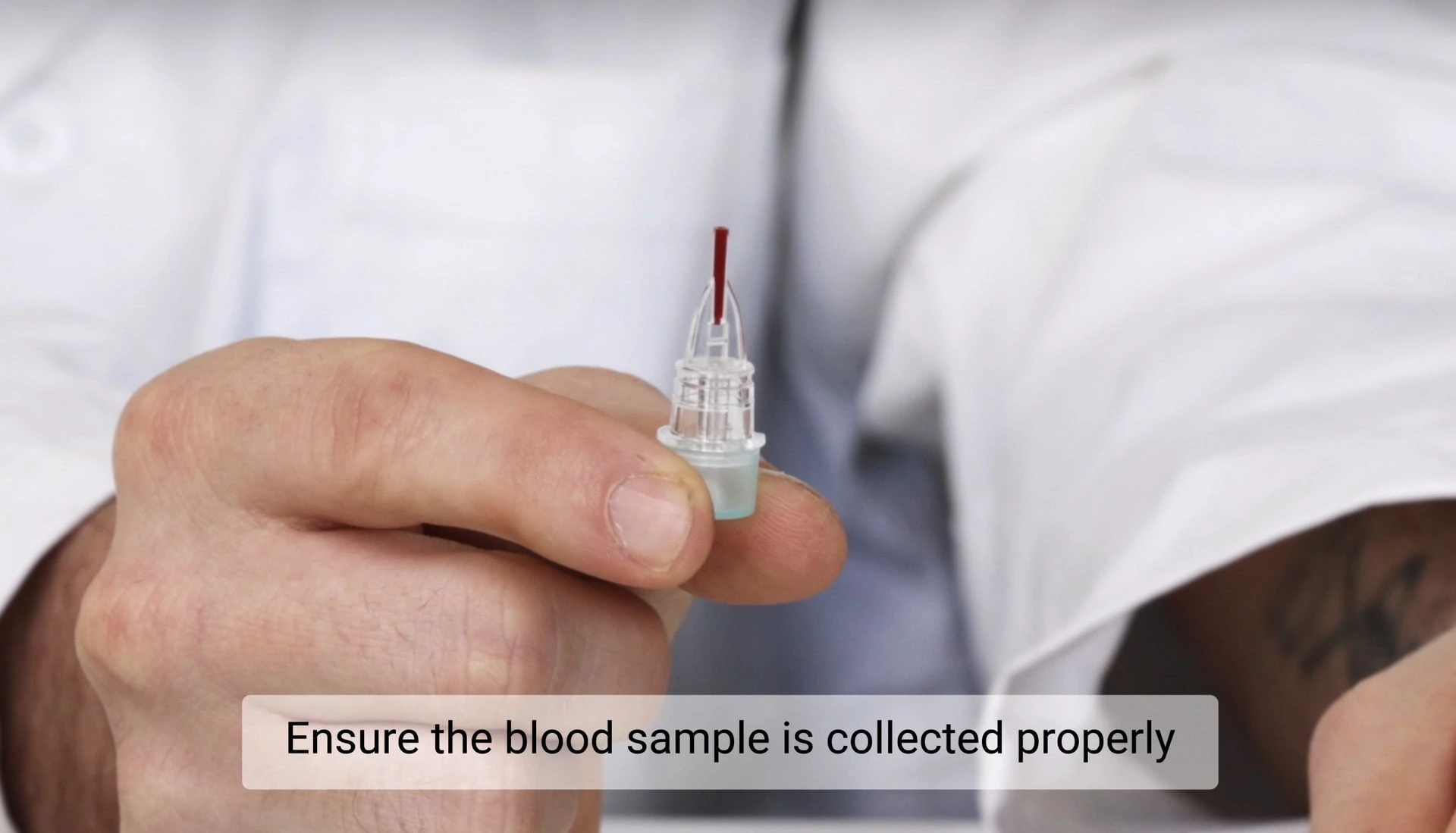
Important
Make sure you have collected exactly 10 µL of blood.
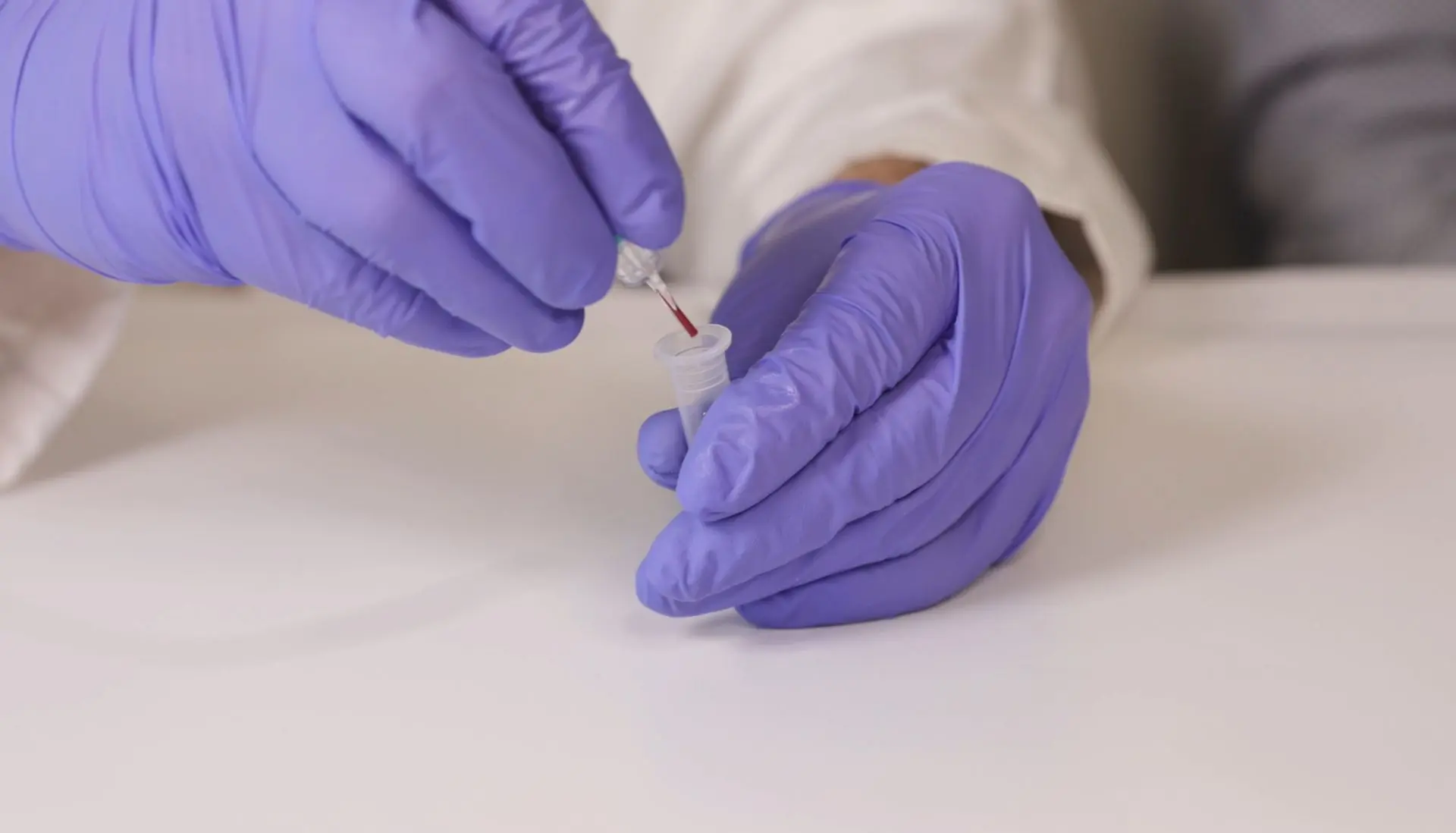
STEP 5: Insert blood collector into tube
Insert blood collector into buffer solution tube and close firmly.
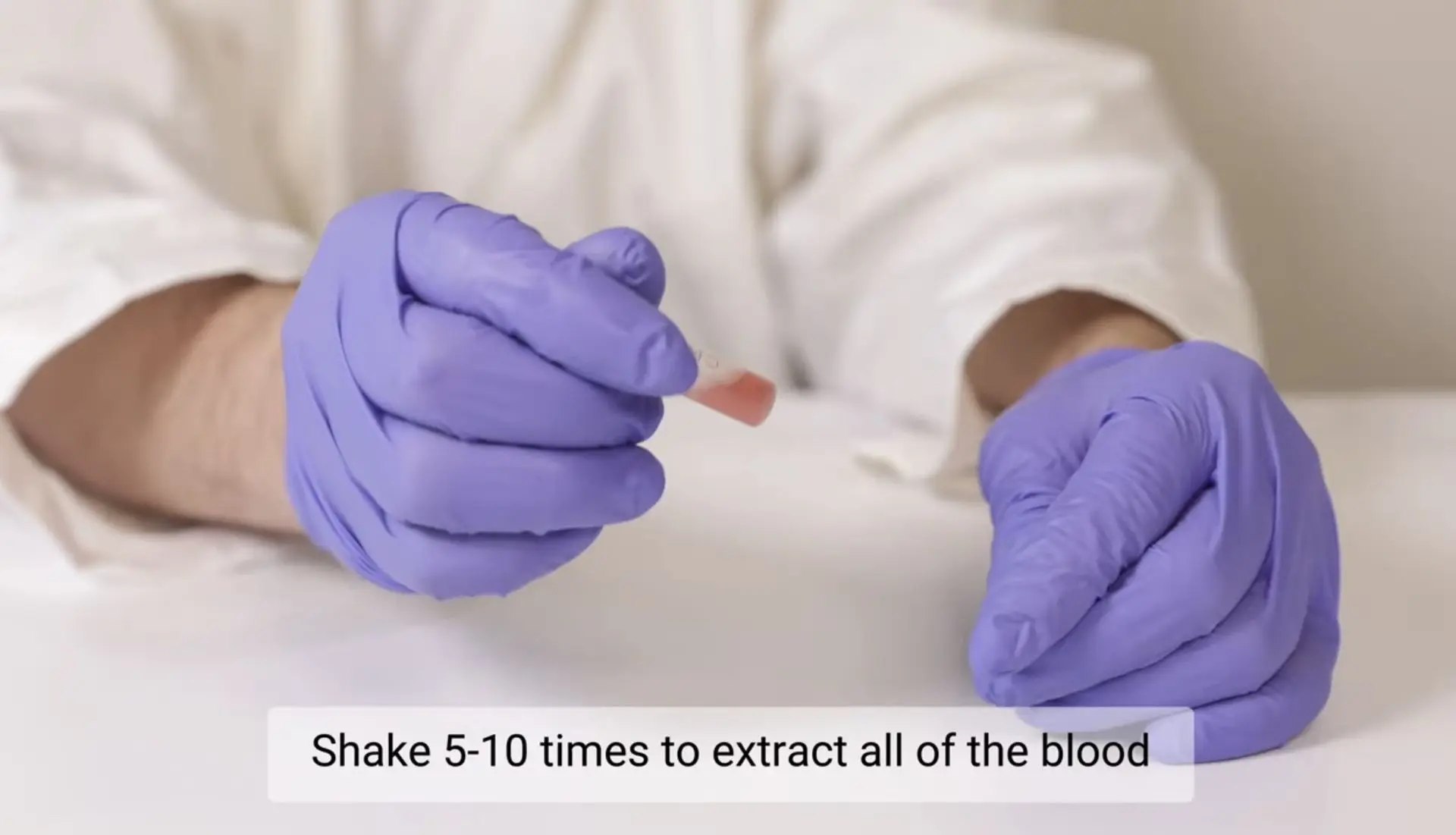
STEP 6: Mix the blood with the buffer
Shake 5–10 times to ensure proper mixing.
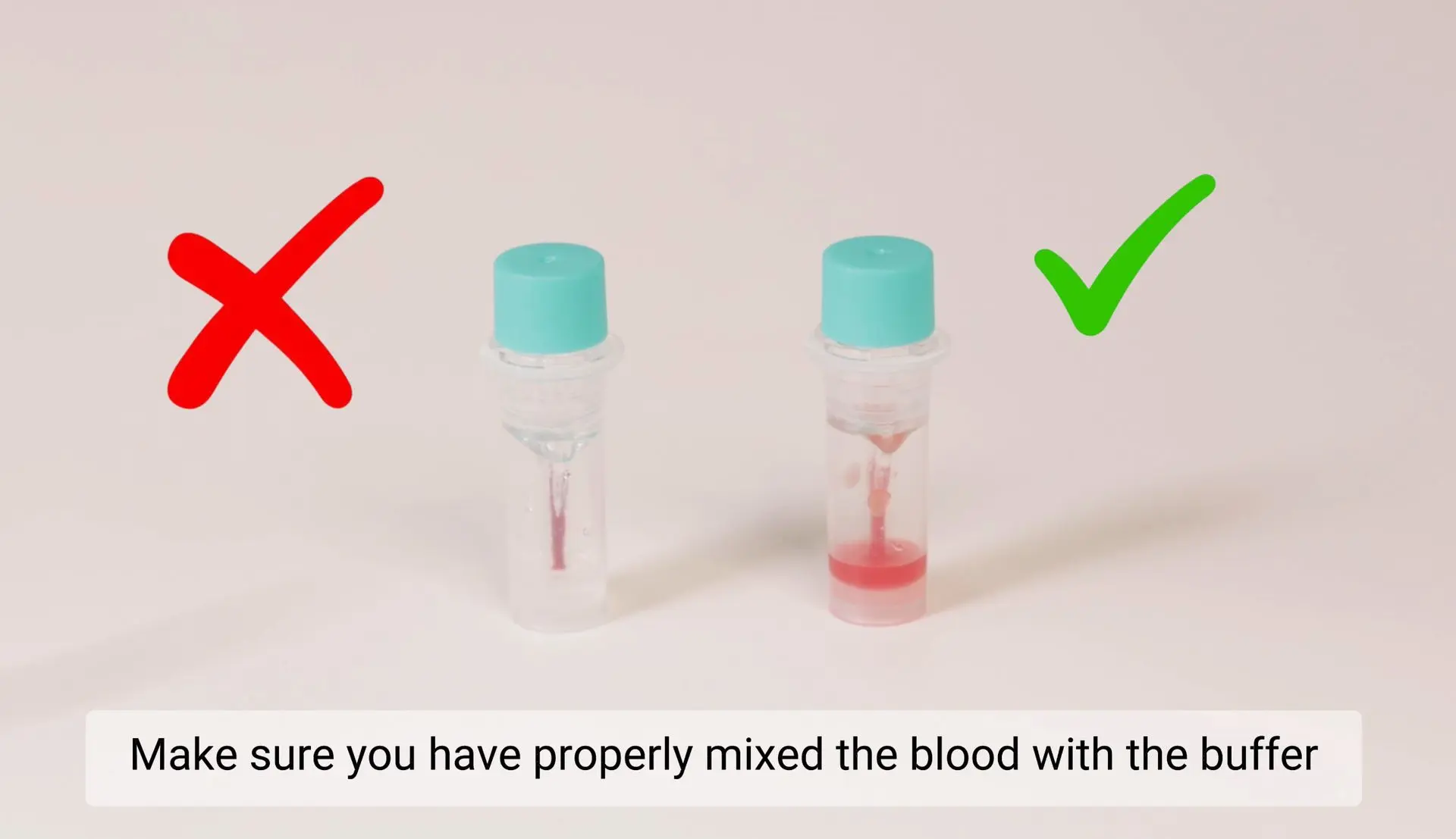
Important
Make sure the blood and buffer are well mixed.
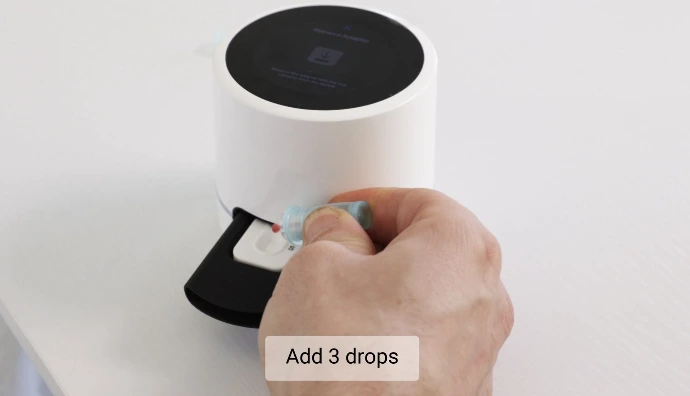
STEP 7: Prepare the test cassette
Add 3 drops of the mixed sample into the test cassette
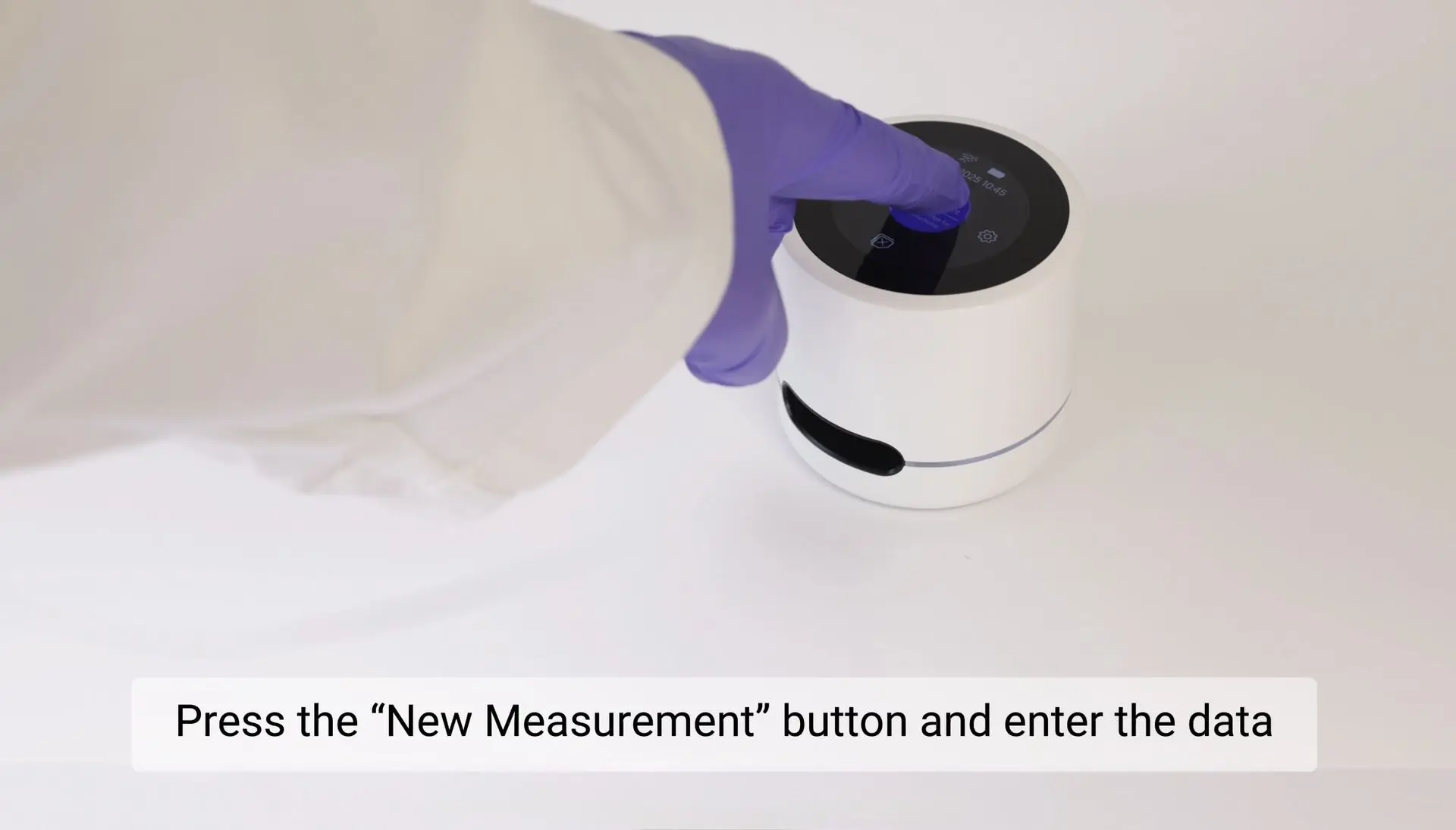
STEP 8: Start using the device
Turn on the device using the power button located underneath.
Once the device is on, press “New Measurement” and enter the required data to begin the test.
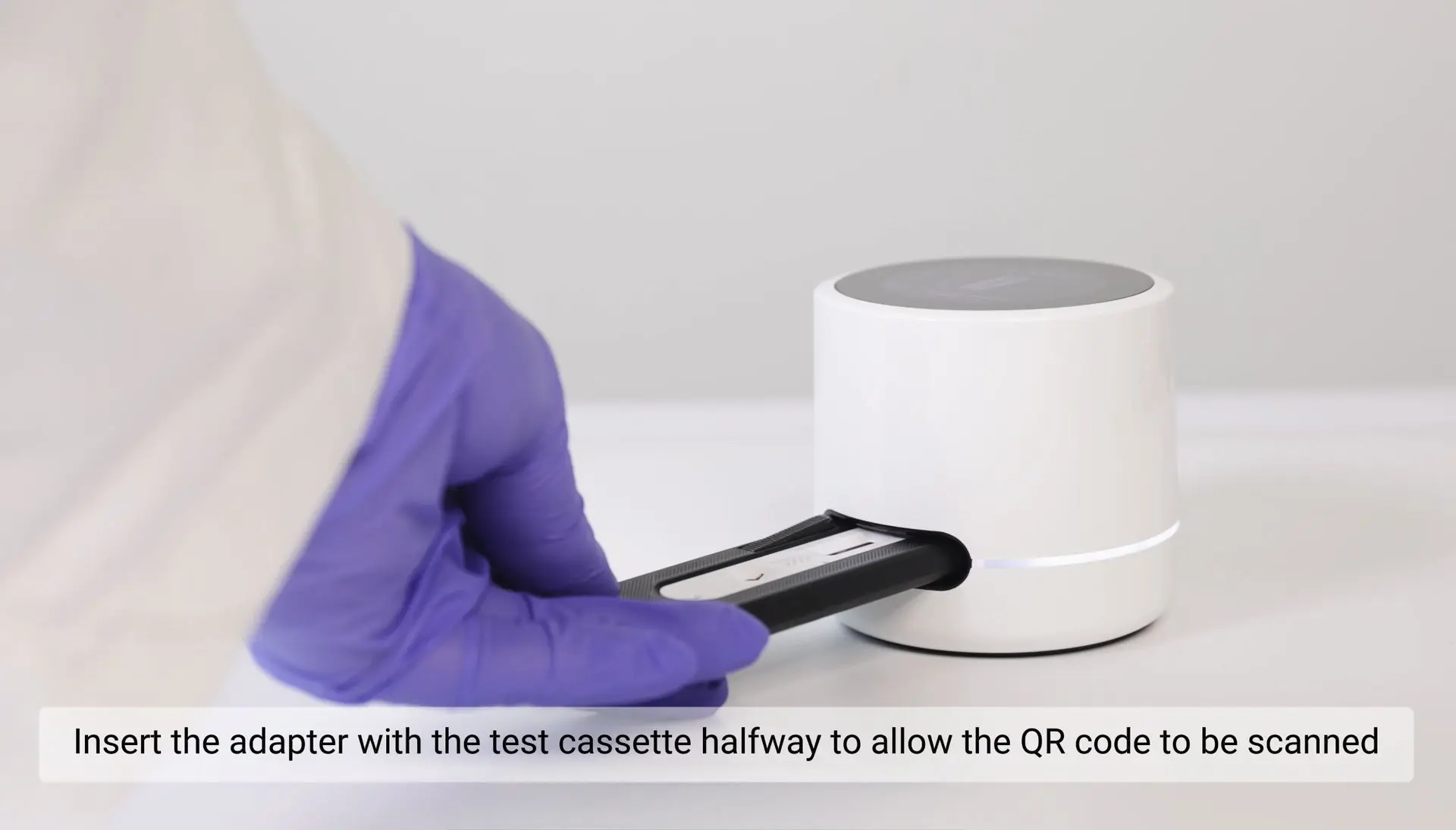
STEP 9: Insert the test cassette into the reader
Insert the test cassette into the reader — the measurement will start automatically.
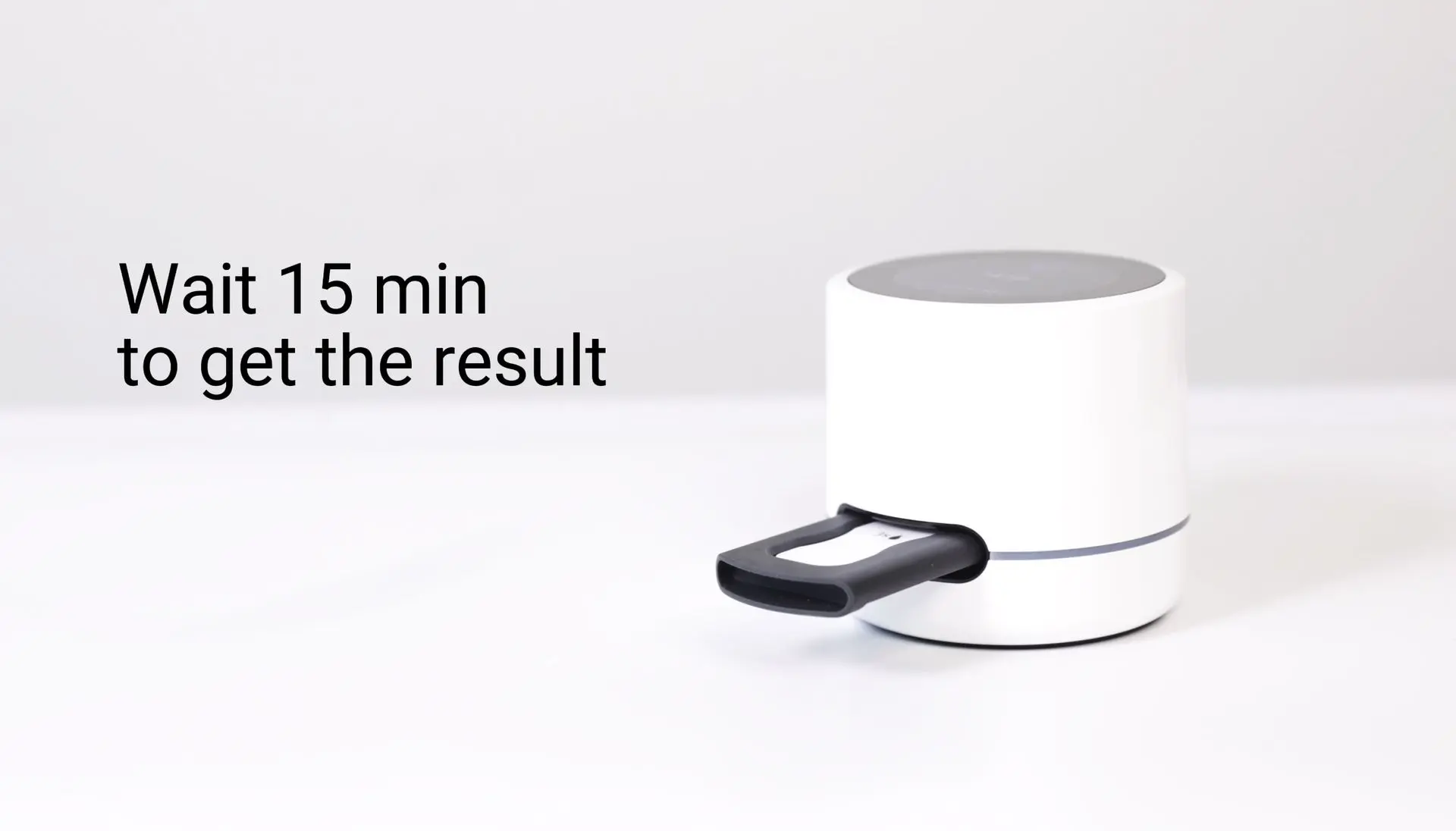
STEP 10: Wait 15 minutes
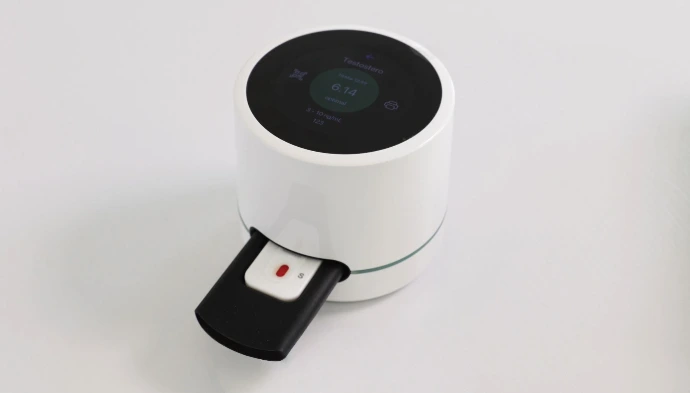
STEP 11: Result is ready
When the timer ends, your result will be displayed on the screen.
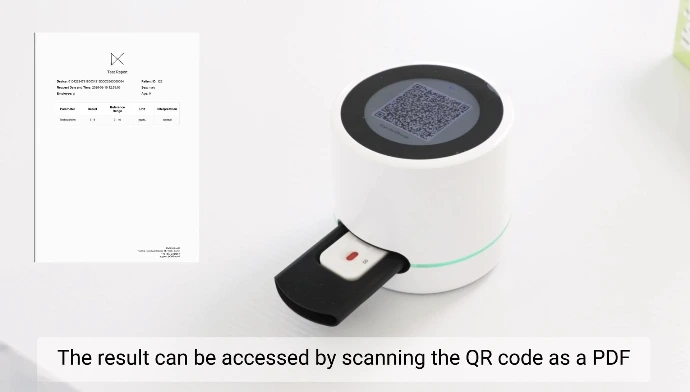
Scan QR for quick results on your phone in PDF form
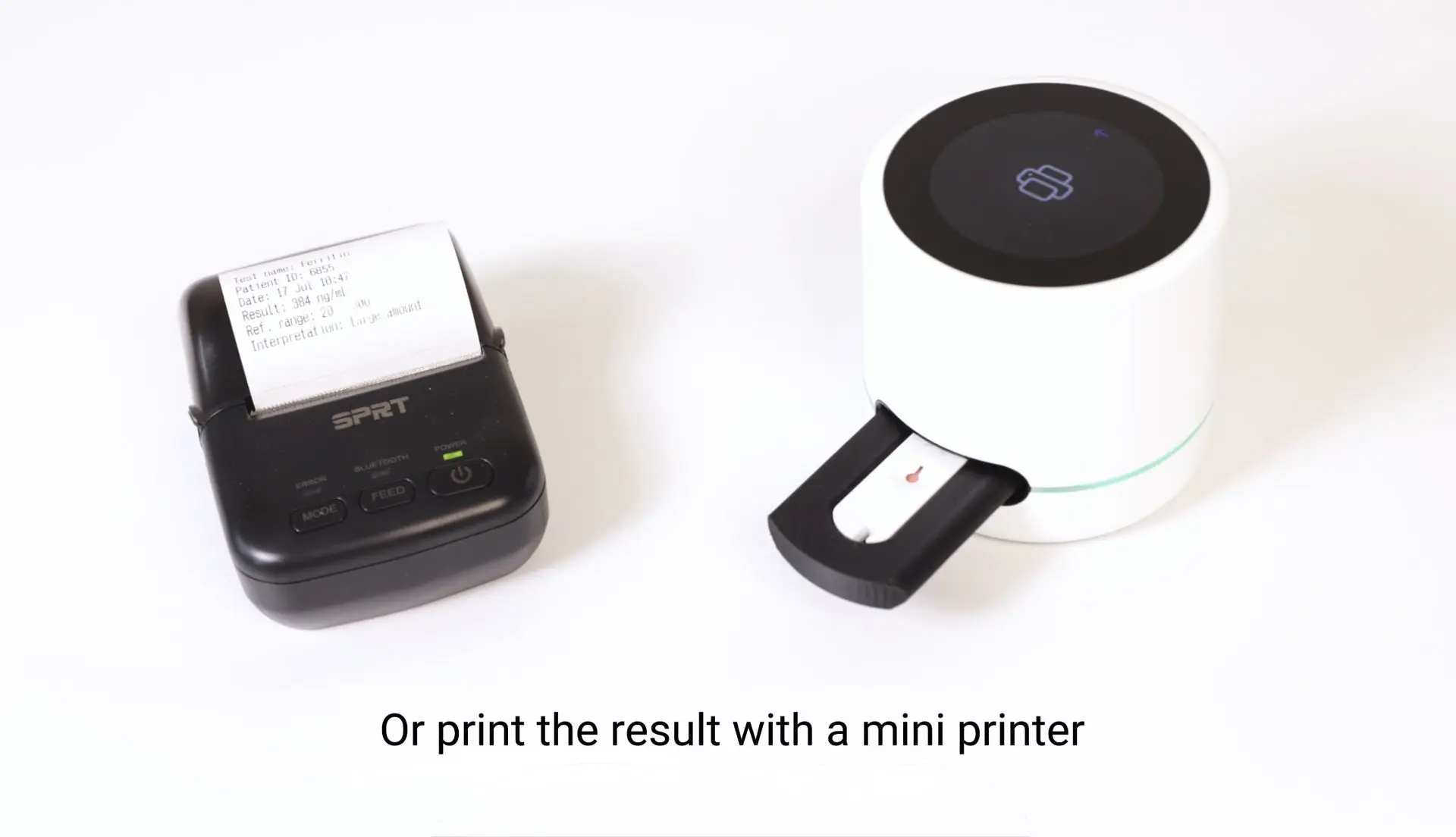
Or print the result with a mini printer
Results evaluation
This test measures total testosterone, which is the most reliable and commonly used method for assessing testosterone levels in blood. Results are reported in ng/mL. Due to linearity range limitations, this test cannot measure values below 1 ng/mL. This means the test is suitable for individuals whose expected testosterone levels are at or above 1 ng/mL — typically the case in adult men, but not necessarily in women or children, whose levels commonly fall below this threshold.
Anyone looking for a personal interpretation of their result should talk to a healthcare professional, since the right context depends on age, health status, and individual circumstances.
Result: Error / No control line
What it means: Test did not run correctly.
How to explain/action: Repeat the test. If the issue persists, check sample and instructions.
Result for adult male: < 3 ng/mL
What it means: Low tesoterone level.
How to explain/action: The patient’s results show lower testosterone levels, which can sometimes be linked to symptoms like low energy or reduced sex drive. It would be important to discuss these results with a healthcare professional for further evaluation.
Result for adult male: 3 – 10 ng/mL
How to explain/action: Reassure the customer and suggest continuing healthy habits along with routine monitoring to support overall well-being.
Result for adult male: > 10 ng/mL
What it means: The customer’s results are above the typical range, which is uncommon in adult men.
How to explain/action: Encourage the customer to speak with a healthcare professional to understand the results and any possible underlying causes.
Key points to keep in mind:
- Timing: Testosterone is naturally highest in the morning (7–10 a.m.), so testing during this window provides the most reliable measurement.
- Fasting and preparation: Customers should fast for at least 8 hours before the test (water only) and avoid alcohol or caffeine the night before and morning of the test. This helps reduce temporary effects on hormone levels.
- Daily and lifestyle factors: Sleep, stress, and illness can temporarily lower testosterone. For example, less than 5 hours of sleep per night for a week can reduce serum testosterone levels by 10–15%, and chronic stress may inhibit production.
- Age and development (young males): Testosterone gradually rises during puberty and varies by age and developmental stage. This is why results in adolescents need careful interpretation.
- Sex and hormonal cycle (females): Testosterone levels in women are lower than in men and may vary slightly across the menstrual cycle. Some tests may not detect female levels reliably.
- Biological and lab variability: Individual factors like body weight, genetics, and binding proteins, as well as differences between lab methods, can affect results. Variation between tests doesn’t always indicate a real change in hormone levels.
- Regular monitoring: Routine checks are recommended to track trends over time and support overall health.
Read more about testosterone and about results evaluation.
Disposal instructions
- Dispose of used cassettes, pipettes, and lancets as biohazardous waste.
- Do not reuse any test components.
- Reader and adapter are reusable; clean according to the official maintenance guide.
Literature
- Total Testosterone: Health Encyclopedia: https://www.urmc.rochester.edu/encyclopedia/content.aspx?contenttypeid=167&contentid=testosterone_total
- Testosterone Levels by Age: https://www.healthline.com/health/low-testosterone/testosterone-levels-by-age
- High Testosterone Levels in Women: https://www.healthline.com/health/high-testosterone-in-women
- Testosterone, Serum testosterone: https://www.mountsinai.org/health-library/tests/testosterone (2025-11)
- Chen, A., Bookstein, J.J., Meldrum, D.R., Diagnosis of a testosterone-secreting adrenal adenoma by selective venous catheterization. Fertil. Steril., 1991; 55: 1202-1203.
- Granoff, A.B. and Abraham, G.E., Peripheral and adrenal venous levels of steroids in a patient with virilizing adrenal adenoma. Obstet. Gynecol., 1979; 53:111-115
- Shalender B et al., Testosterone Therapy in Men With Hypogonadism: An Endocrine Society Clinical Practice Guideline, The Journal of Clinical Endocrinology & Metabolism, Volume 103, Issue 5, May 2018, Pages 1715–1744, doi: 10.1210/jc.2018-00229
- Mulhall JP et al. Evaluation and Management of Testosterone Deficiency: AUA Guideline. Journal of Urology. 2018 Aug 1;200(2):423–32. doi: 10.1016/j.juro.2018.03.115
- Leproult R, Van Cauter E. Effect of 1 week of sleep restriction on testosterone levels in young healthy men. JAMA. 2011 Jun 1;305(21):2173-4. doi: 10.1001/jama.2011.710
- Cleveland Clinic - Health Essentials - Why Are Testosterone Levels Decreasing?
- Cleveland Clinic - Testosterone
- NIH - StatPearls - Testosterone
Disclaimer
This information is educational and does not qualify as medical advice. Always use local reference ranges and consult a healthcare professional for diagnosis and treatment.