How to perform test
HbA1c | Lansionbio
Video tutorial for HbA1c by Lansionbio
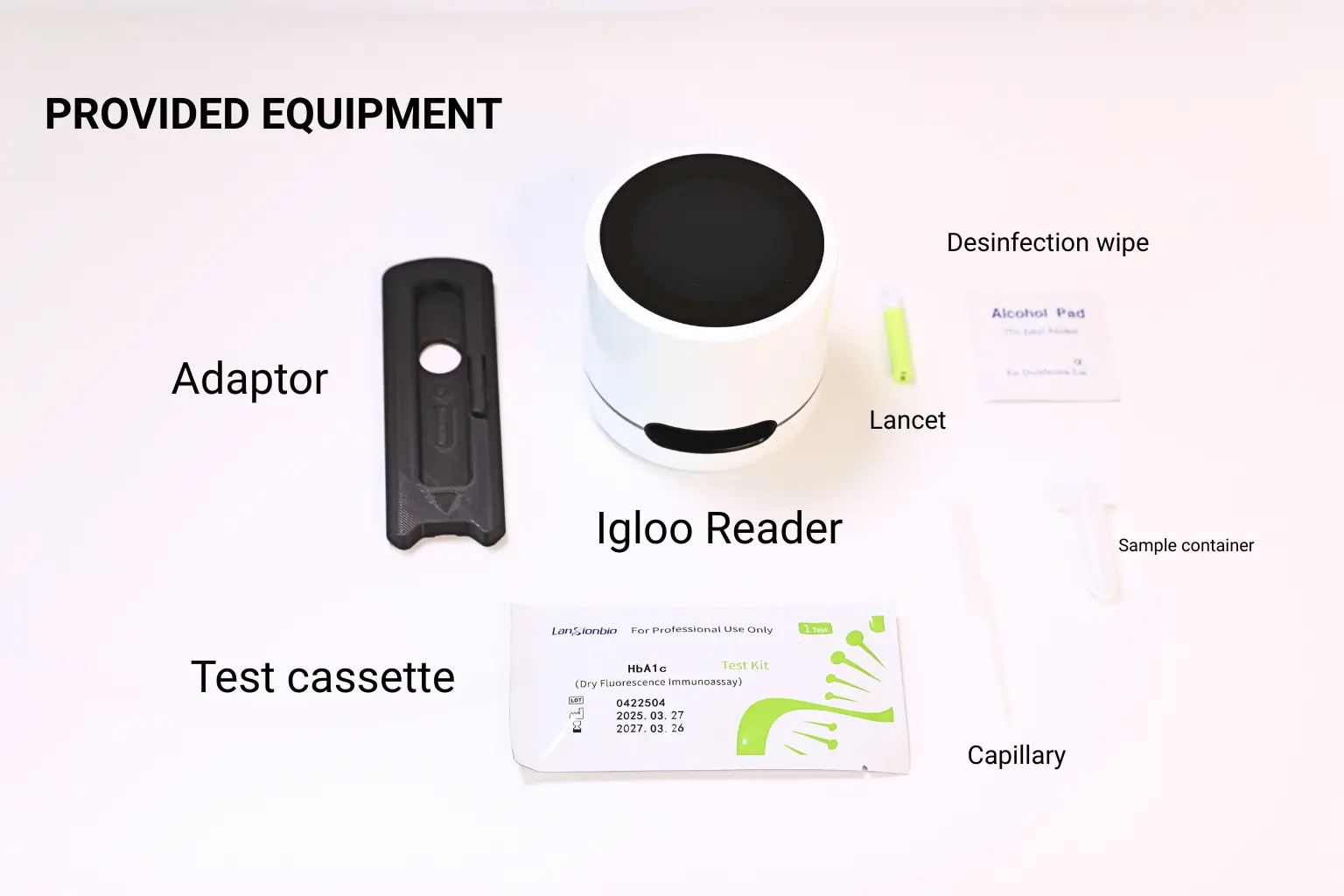
Supplies overview
- 1x HbA1C Test Cassette
- 1x 5-100µL Pipette / Capillary
- 1x Sterile Lancet
- 1x Alcohol Swab
- 1x Desinfection wipe
- 1x Buffer Solution Tube
- 1x Igloo Reader
- 1x Lansionbio Adapter
Included in test box:
- 1x HbA1C Test Cassette
- 1x 5-100µL Pipette / Capillary
- 1x Buffer Solution Tube
Additionally needed to perform test:
- 1x Sterile Lancet
- 1x Desinfection wipe
- 1x Igloo Reader
- 1x Lansionbio Adapter
Text instructions
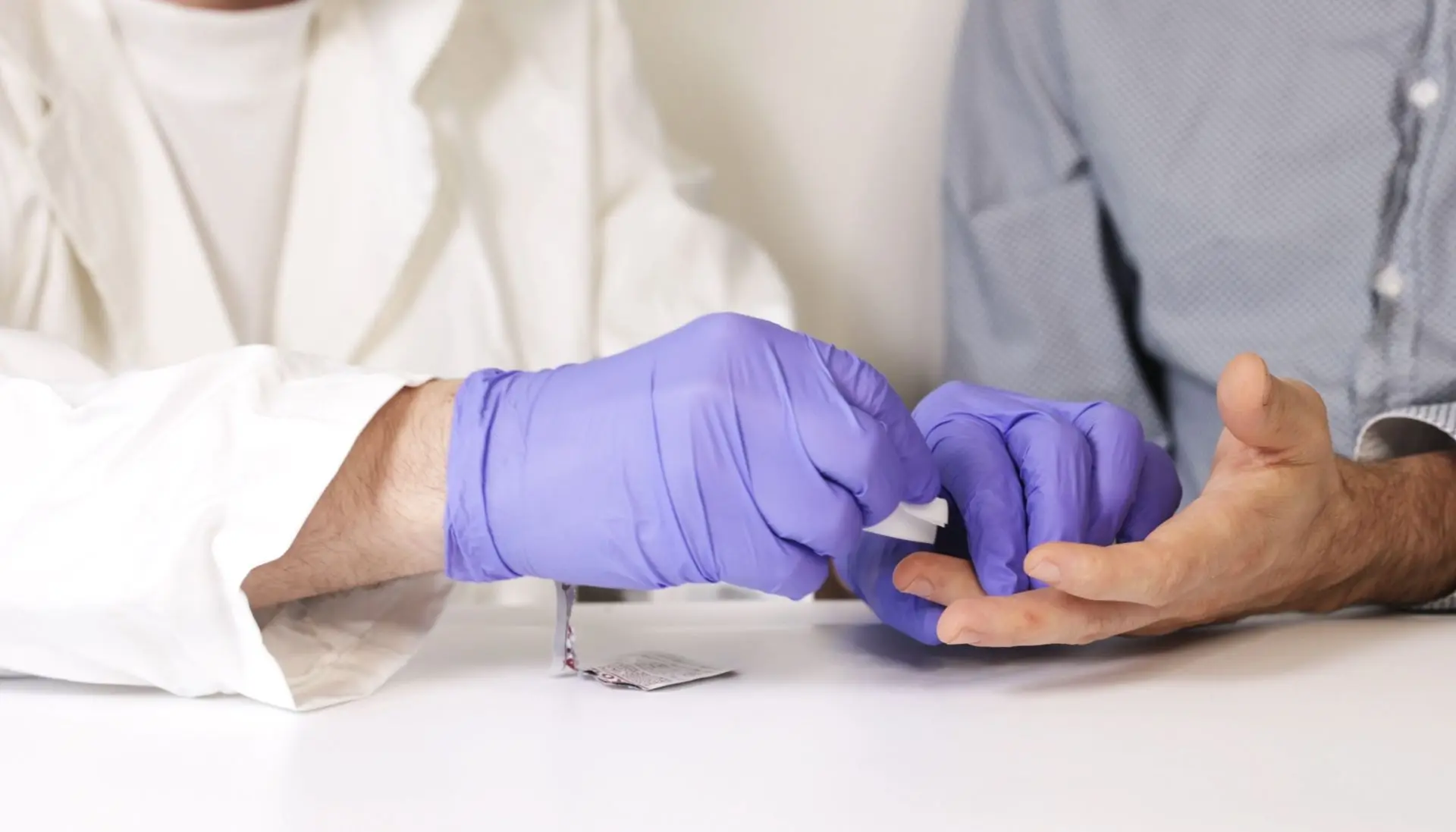
STEP 1: Prepare and Disinfect the Sampling Area
Lay out all kit components. Disinfect the fingertip with the alcohol swab and let it dry.
Warm hands make blood sampling easier! Allow the test subject to warm their hands beforehand with a warm cloth, warm water, or by gently rubbing their hands together.
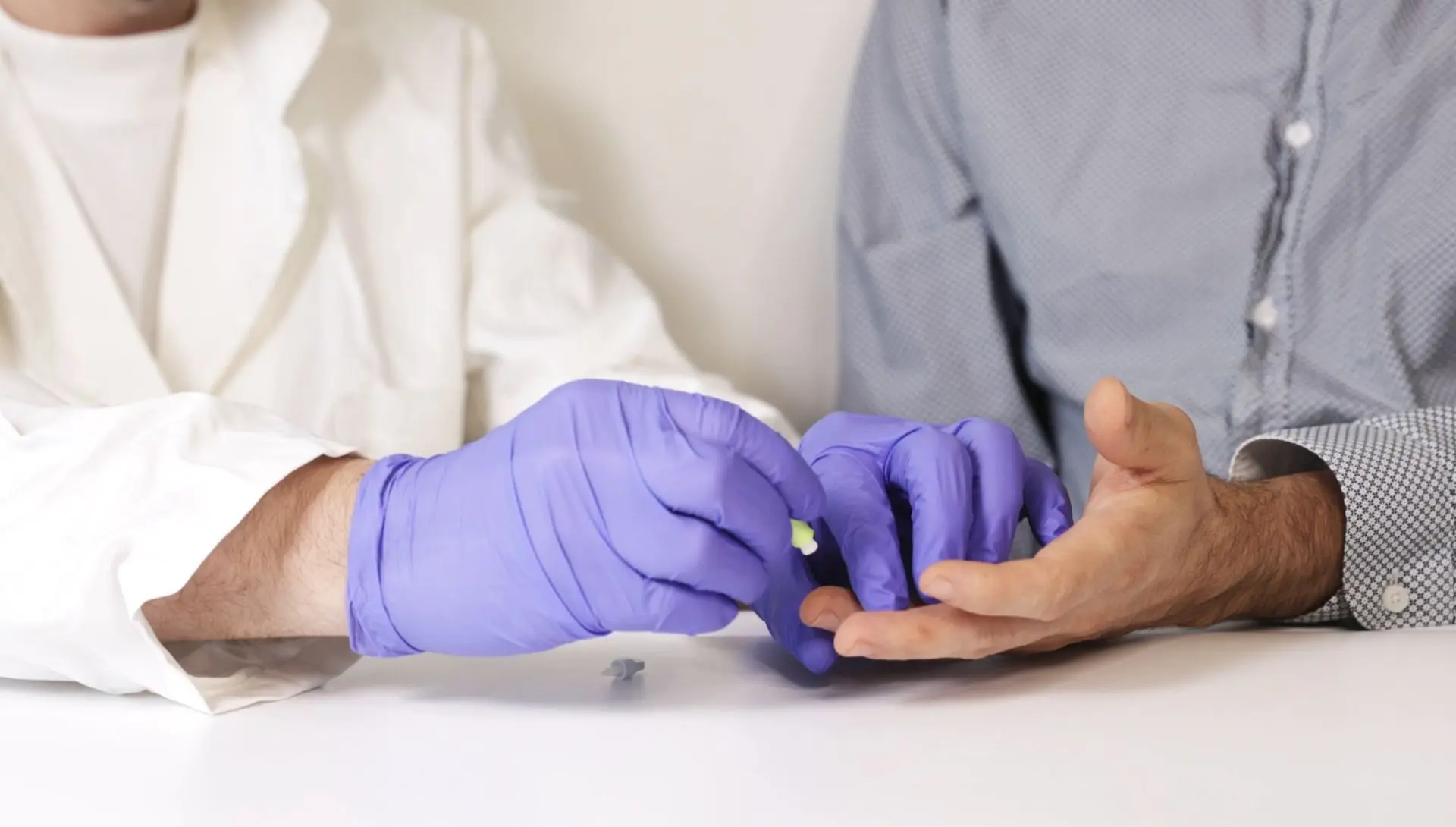
STEP 2: Perform a Fingerstick
Use the sterile lancet to puncture the side of the fingertip. Gently massage the finger to form a blood drop.
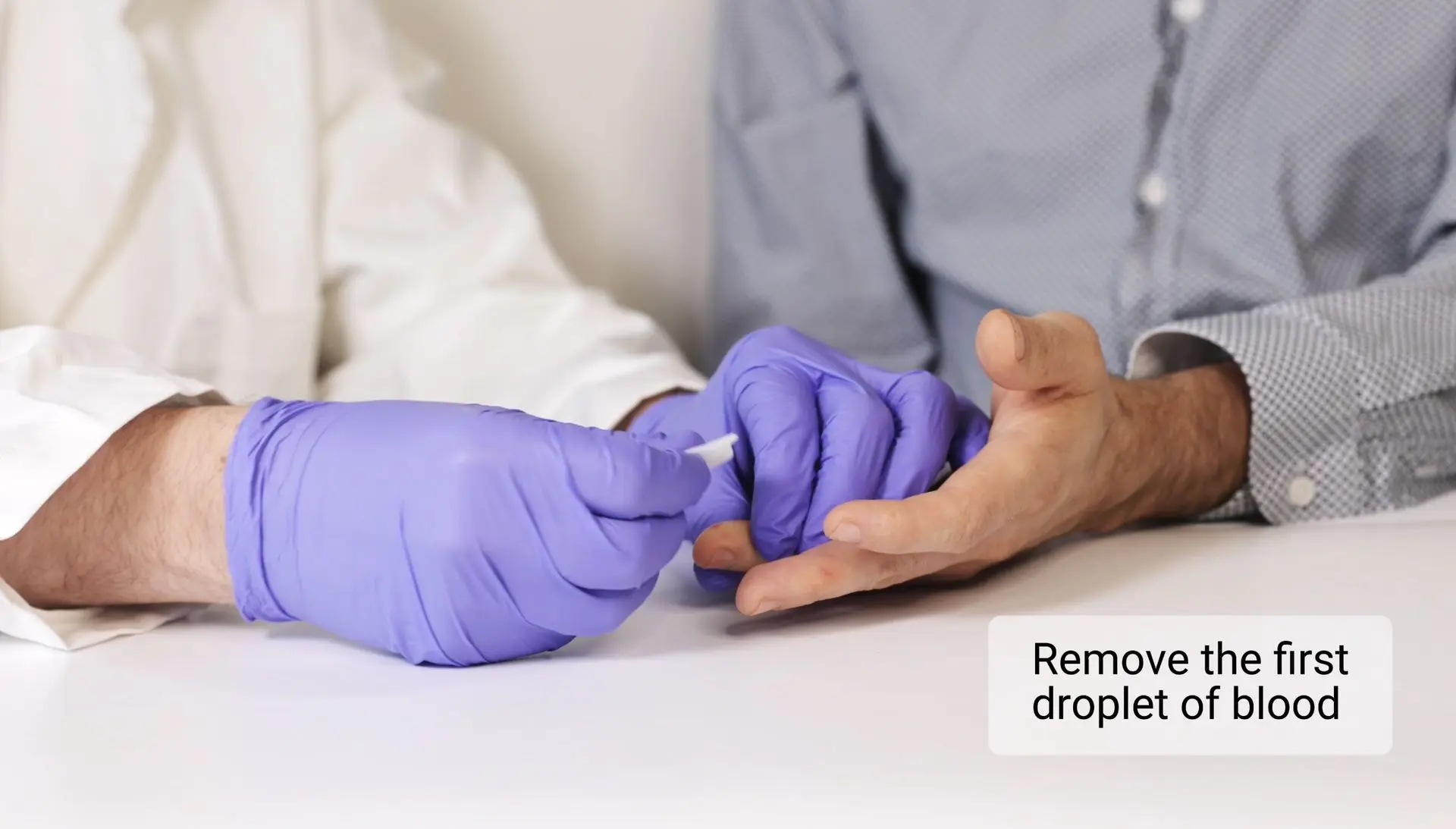
STEP 3: Remove the first droplet of blood
Wipe away the first drop of blood with a sterile swab before collecting the sample. This ensures accuracy and prevents contamination.
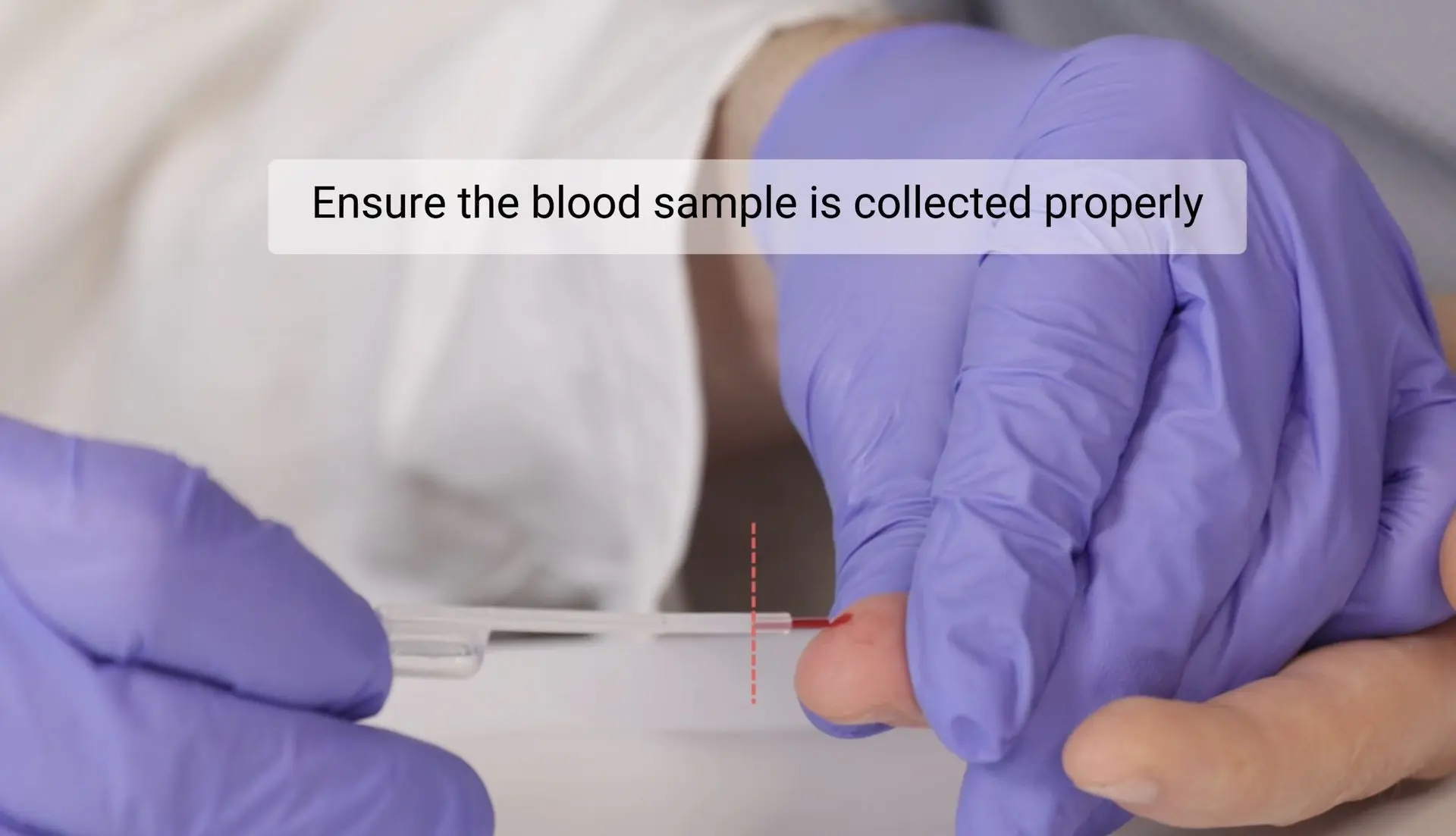
STEP 4: Collect exactly 5 µL of blood
The blood will fill the pipette automatically by capillary action. The small inserted tube at the end of the pipette corresponds to the correct sample volume.
Important: Ensure the blood sample is collected properly.
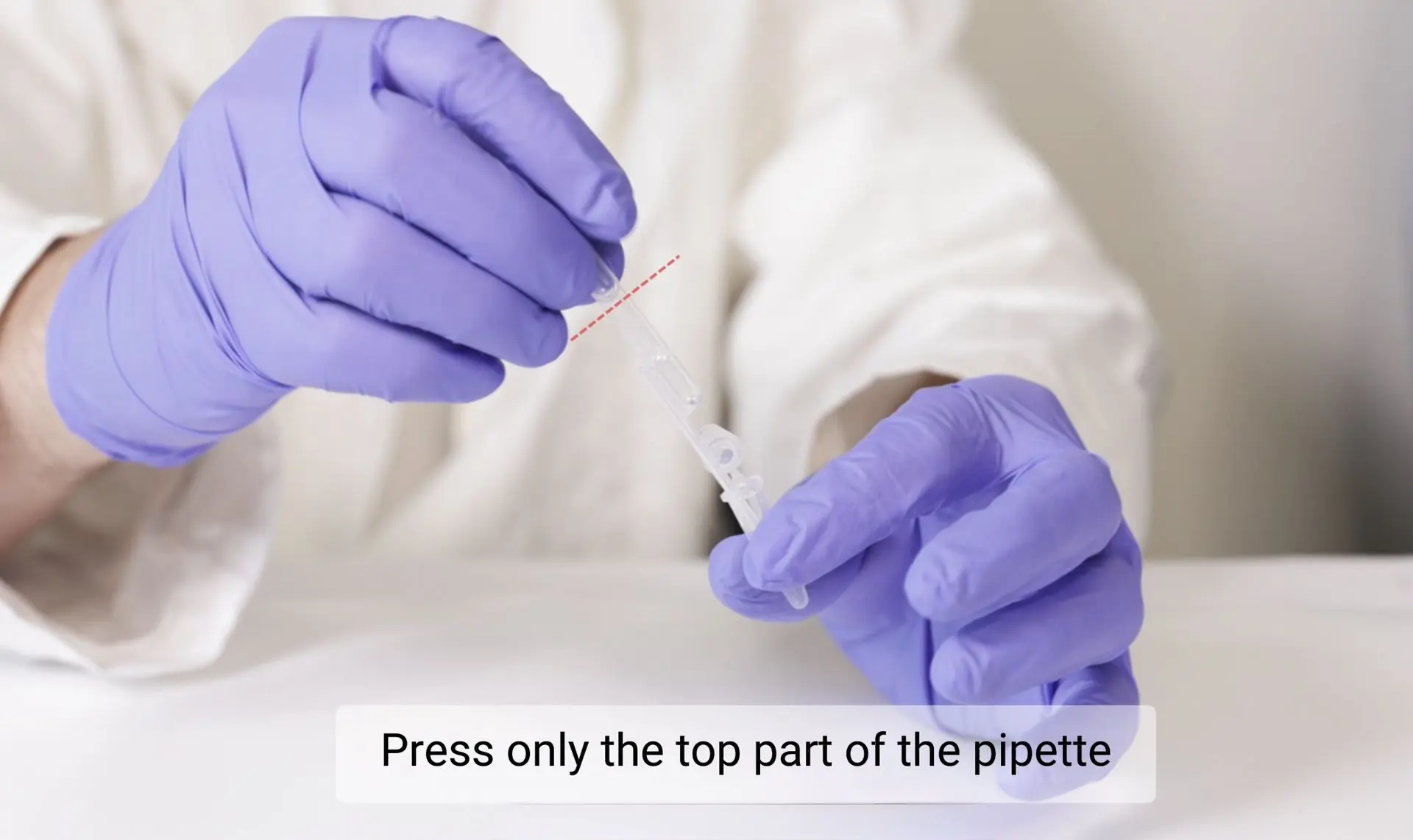
Important
Handle the pipette gently. Use only the top part when drawing up or releasing liquid.
Hold the upper part of the pipette and avoid squeezing too hard to ensure accurate volume and prevent air bubbles.
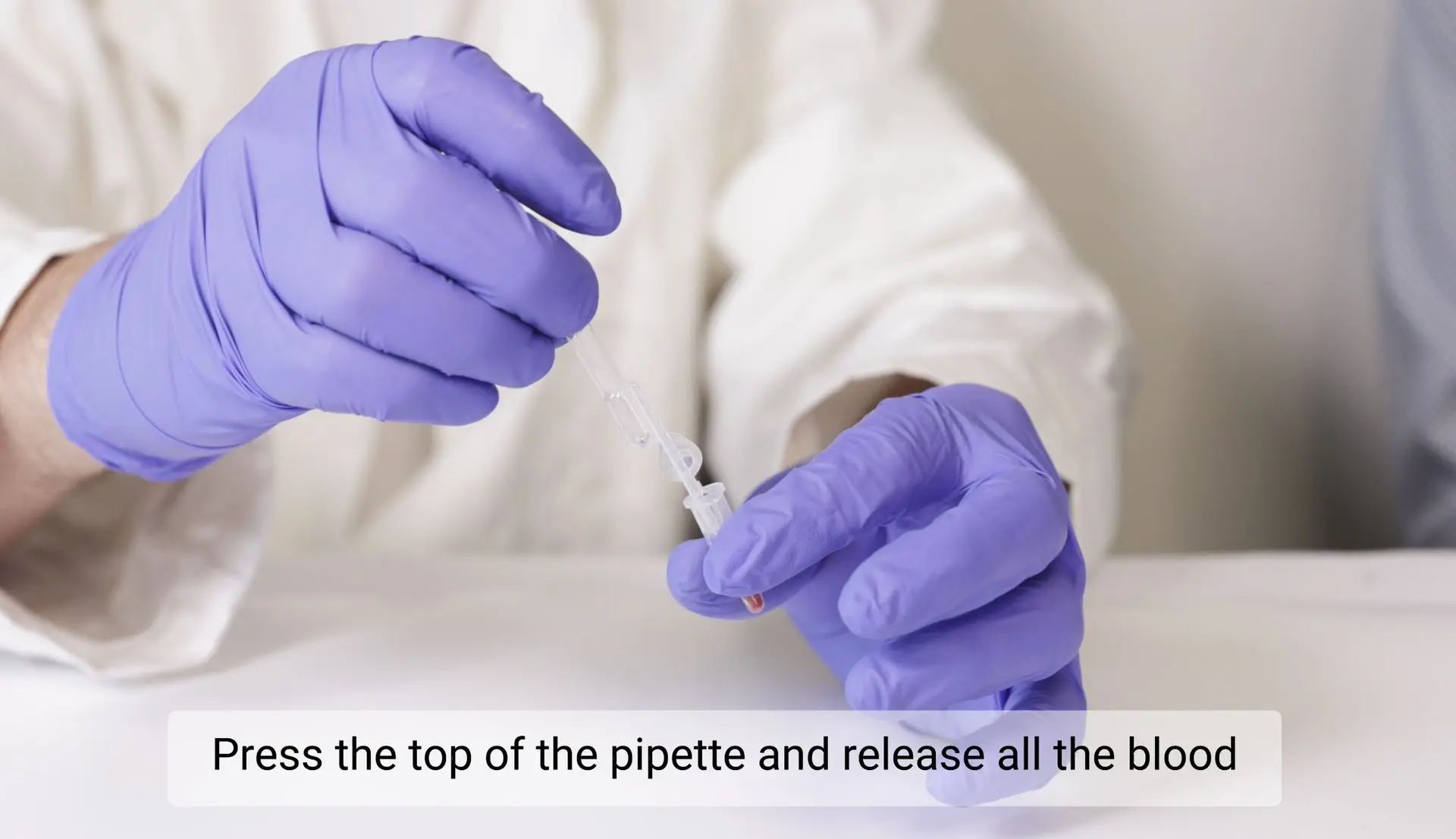
STEP 5: Transfer Blood into Buffer
Gently press only the top of the pipette to release the entire blood sample into the buffer tube for proper mixing. To deliver sample from the pipette completely, gently absorb and release some buffer solution.
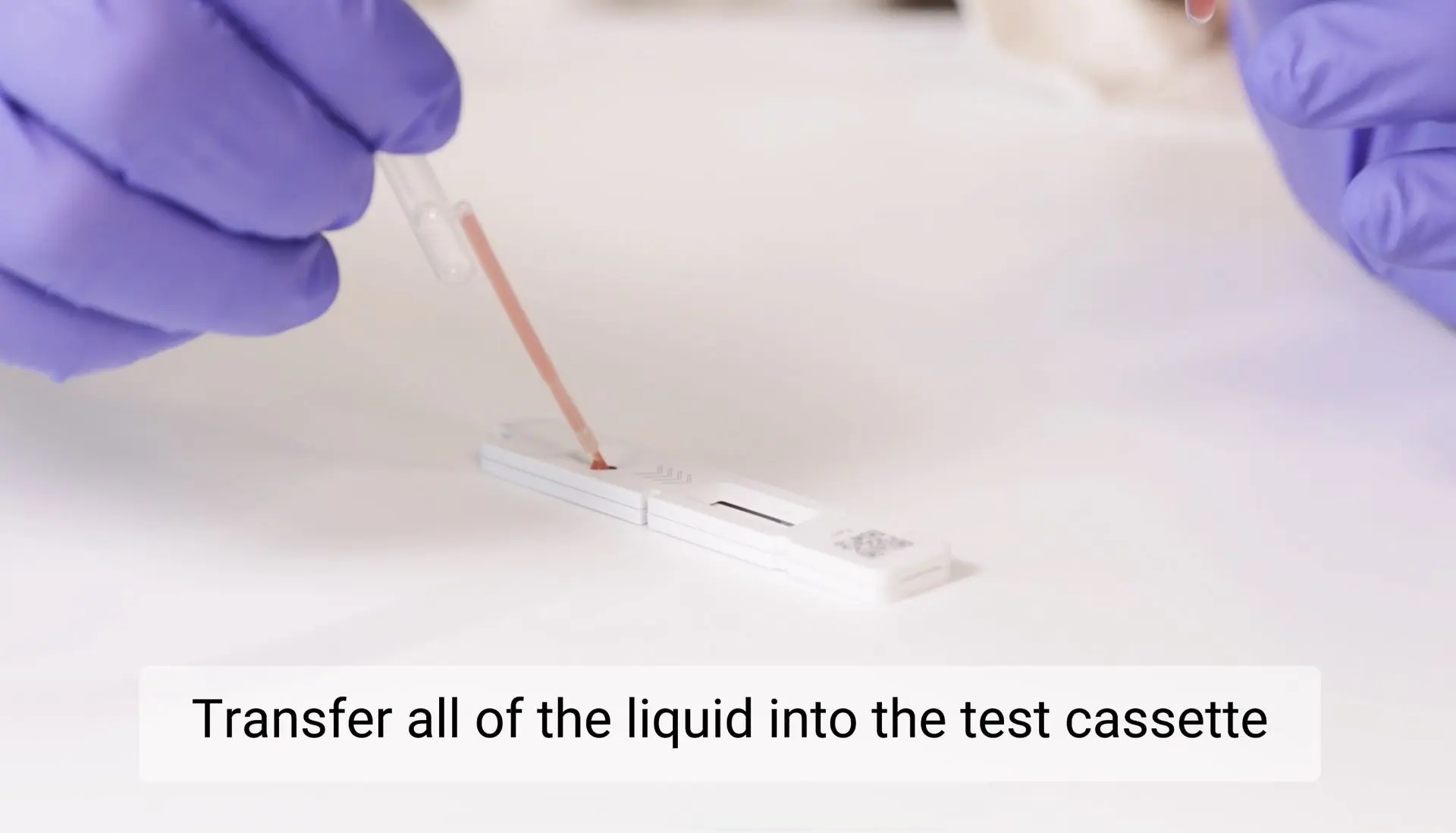
STEP 8: Prepare the test cassette
Transfer the full volume from the pipette into the test cassette.
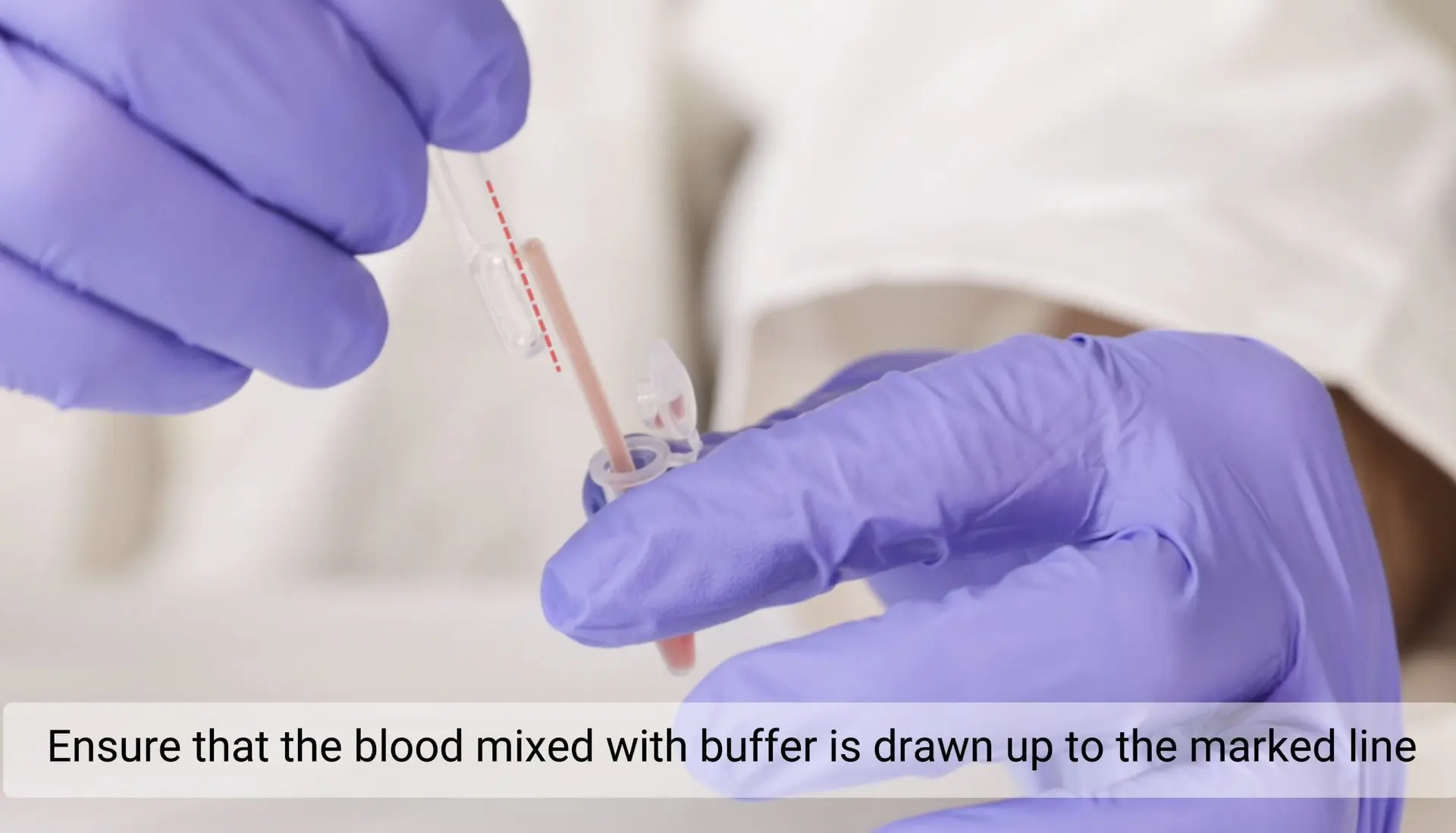
STEP 7: Collect 100 µL of the mixed blood and buffer solution
Gently press the top of the pipette to collect the mixed blood and buffer up to the indicated mark. The 100 µL correspond to the full length of the tube up to the first bubble.
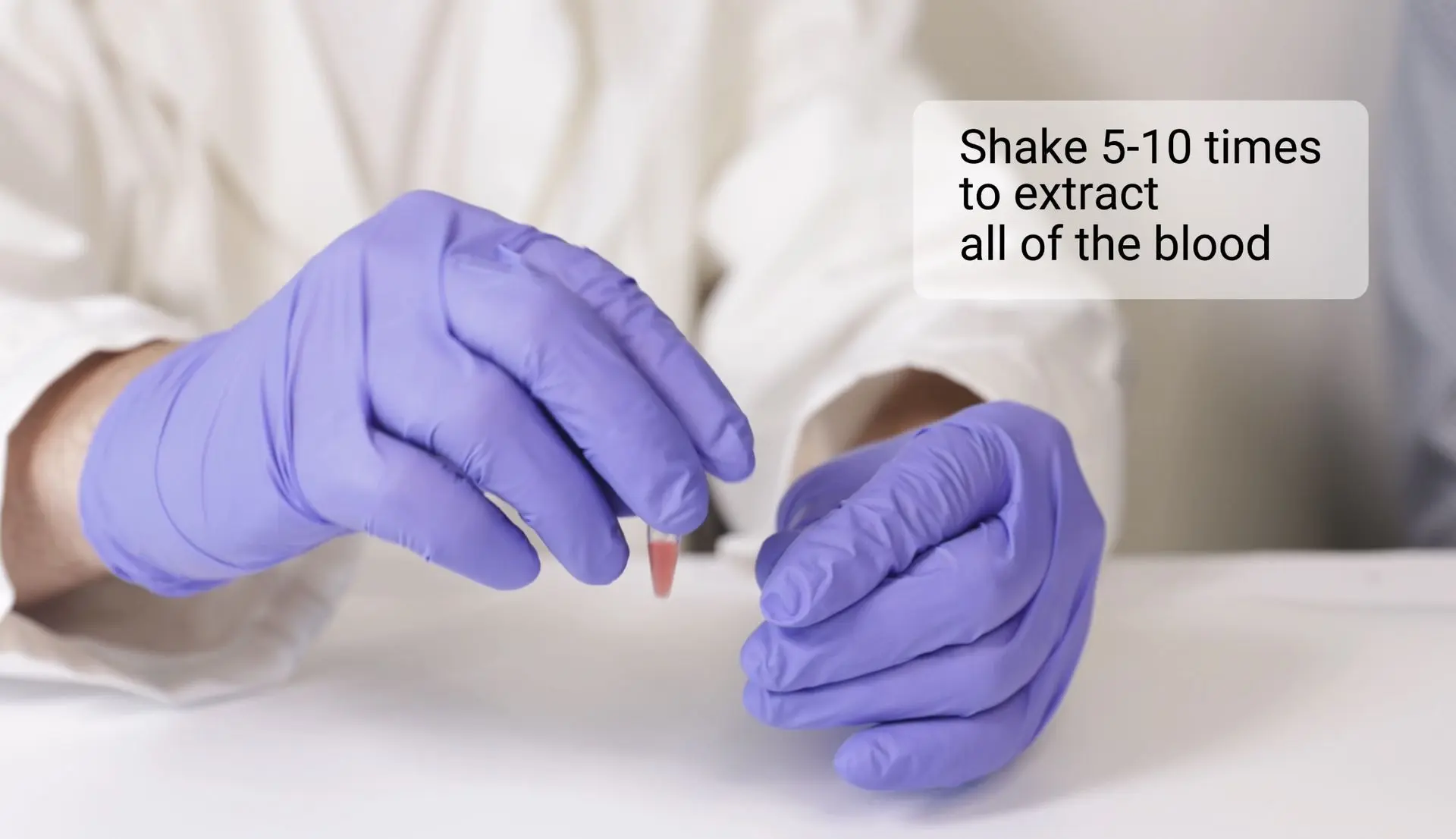
STEP 6: Mix the blood with the buffer
Shake 5–10 times to ensure proper mixing and let it stand for 60 seconds.
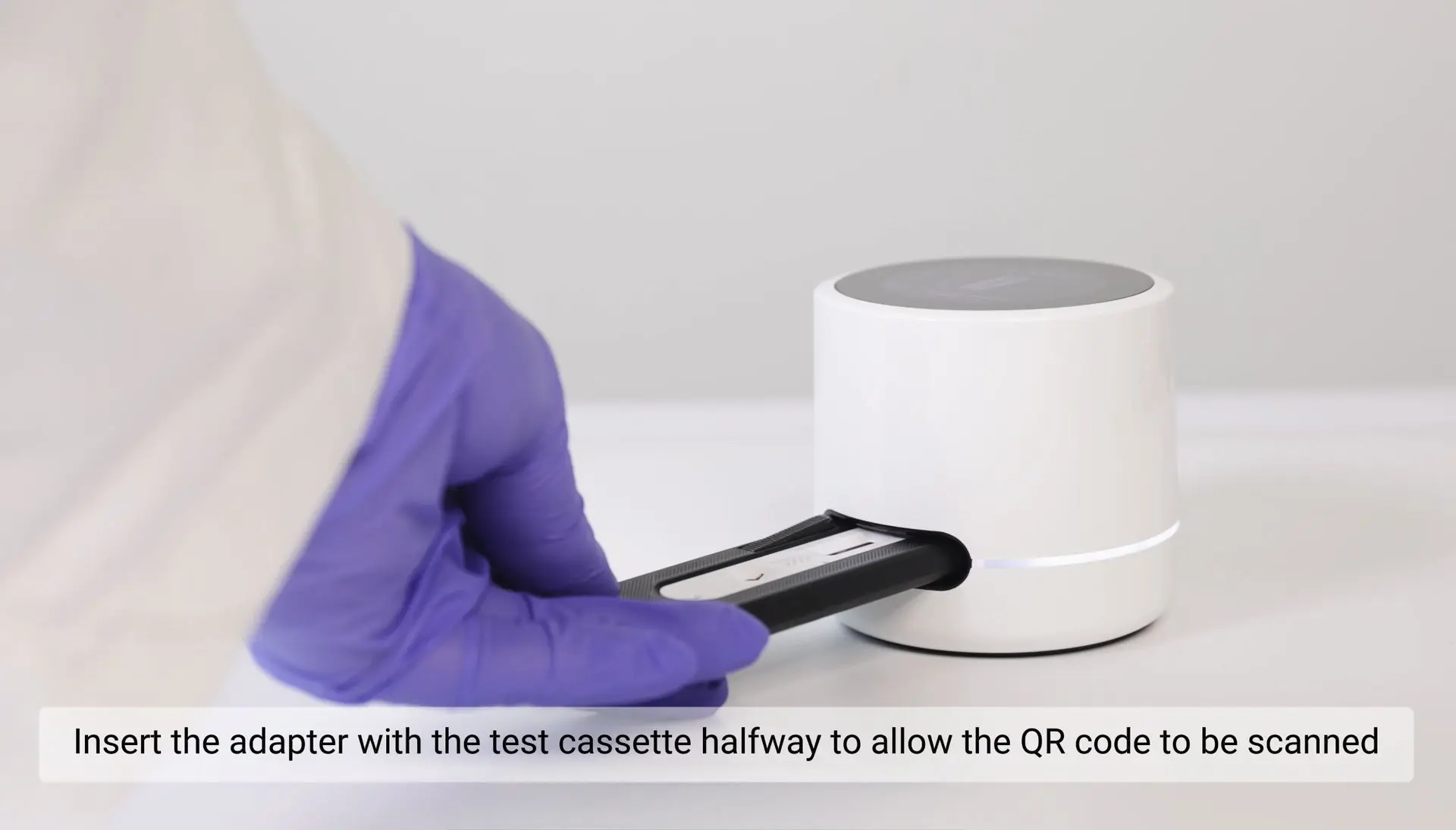
STEP 10: Insert the test cassette halfway into the reader
Insert the test cassette halfway into the reader to enable QR code scanning. Wait until the reader completes the scan and the green indicator light turns on.
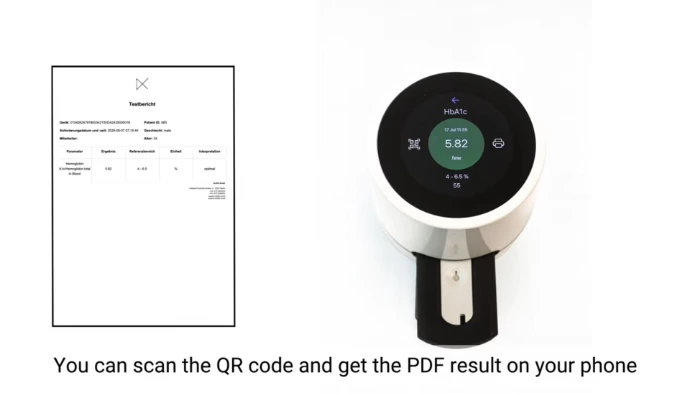
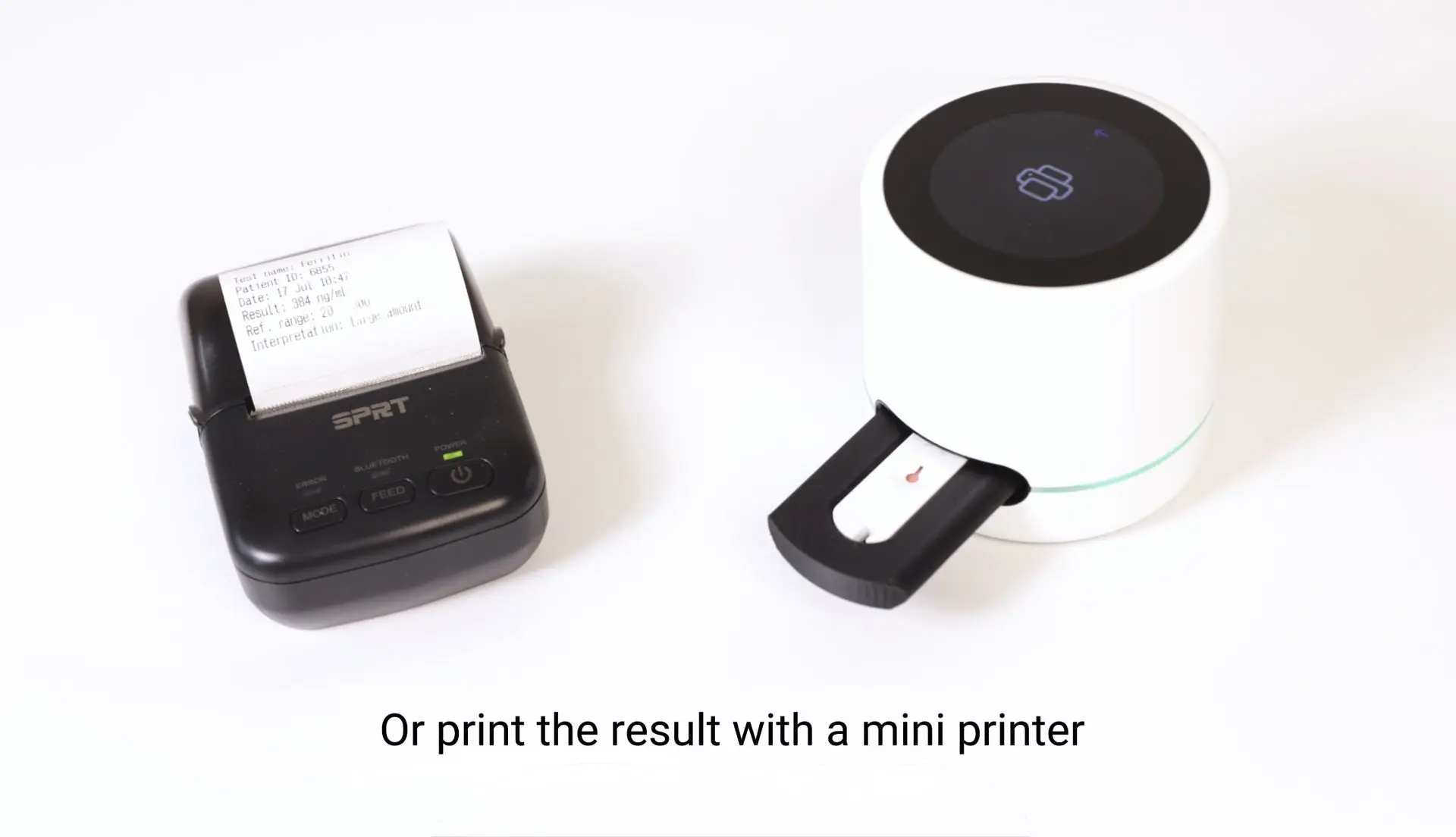
Or print the result with a mini printer
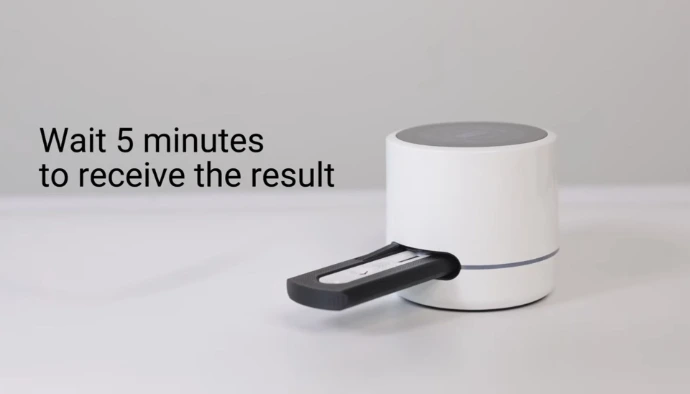
STEP 12: Wait 5 minutes
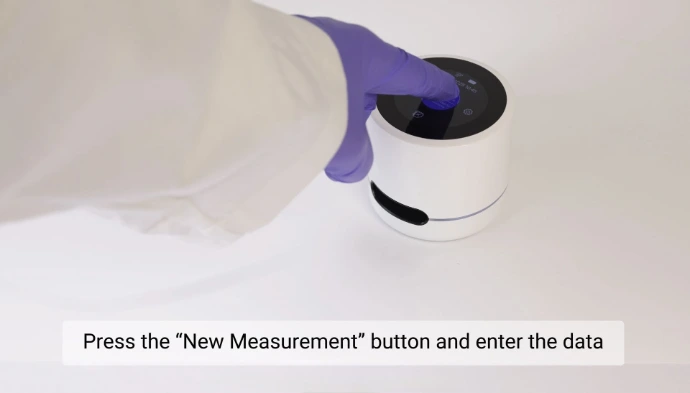
STEP 9: Start using the device
Turn on the device using the power button located underneath.
Once the device is on, press “New Measurement” and enter the required data to begin the test.
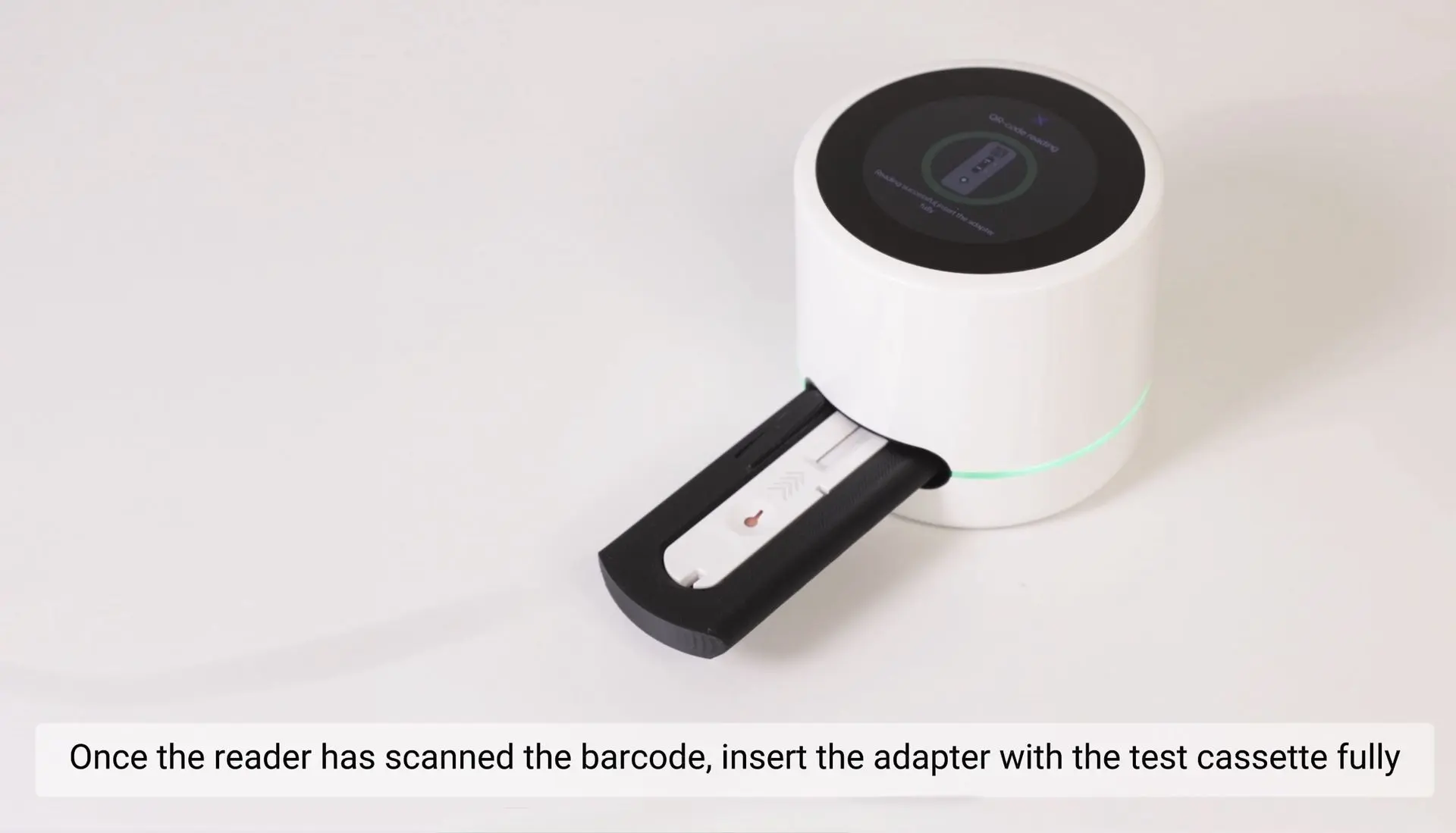
STEP 11: Insert the test cassette fully
Once the indicator light turns green, insert the test cassette completely to start the measurement.
For the measurement to be performed, the temperature must be between 22–26 °C
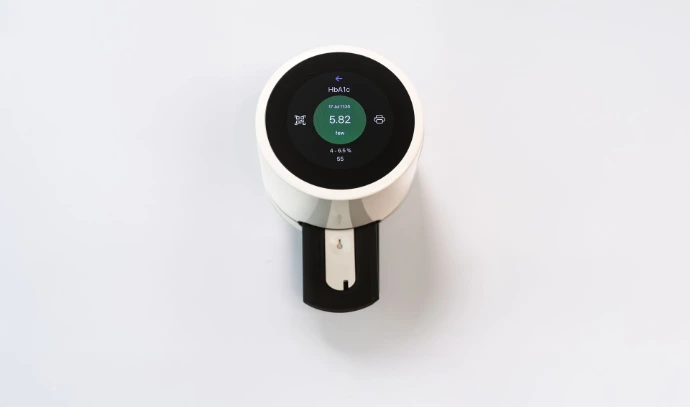
Result is ready
Scan QR for quick results on your phone in PDF form
Results evaluation
Rapid HbA1c tests may differ slightly from laboratory results - this is normal and does not mean the device is faulty. Use these ranges to explain results clearly to customers and guide next steps.
Result: Error / No control line
What it means: Test did not run correctly.
How to explain/action: Repeat the test. If the issue persists, check sample and instructions.
Result: 0
What it means: Test did not run correctly.
How to explain/action: Repeat the test. If the issue persists, check sample and instructions.
Result: < 5.7
What it means: Normal glycemic control.
How to explain/action: Reassure customer. Encourage healthy habits and routine screening.
Result: 5.7 – 6.4
What it means: Prediabetes range.
How to explain/action: Explain increased risk. Recommend lifestyle changes, follow-up testing, visit of a medical professional.
Result: ≥ 6.5
What it means: Diabetes range.
How to explain/action: Advise medical consultation for diagnosis and management.
Blood Glucose & HbA1c: Results look different
Blood glucose and HbA1c measure different aspects of glycaemia:
- Blood glucose reflects the glucose level at a specific moment
- HbA1c reflects the average glucose exposure over the previous ~8-12 weeks
Because they measure different timeframes and are influenced by different biological factors, results may sometimes not match. This is common and does not automatically indicate an error or disease change.
Scenario 1: High blood glucose but low HbA1c
- recent change in diet, illness, stress, or medication
- short-term hyperglycaemia not yet reflected in HbA1c
- conditions shortening red blood cell lifespan (e.g. some anaemias)
- chronic kidney disease or certain medications affecting HbA1c reliability
- repeat glucose monitoring as recommended
- review recent lifestyle or medication changes
- discuss results with their general practicioner or diabetes team
- consider follow-up testing if mismatch persists
Scenario 2: Low blood glucose but high HbA1c
- recent improvement in glucose control
- iron deficiency anaemia
- haemoglobin variants (genetic differences in the structure of haemoglobin)
- longer red blood cell lifespan
- biological differences between individuals in haemoglobin glycation
- continue regular monitoring
- avoid interpreting a single reading alone
- discuss possible causes with their healthcare professional
- follow recommended repeat laboratory testing if advised
Key points to keep in mind:
Point-of-care variation can differ slightly from lab results - small differences (e.g., HbA1c just above/below a cutoff) are often within expected biological/test variability and not a device malfunction.
If you see 0 or error (no control line), the test may not work - repeat the test.
For borderline values (especially near 5.7–6.5), users should advise follow-up testing and/or clinician review rather than assume the tool is wrong.
HbA1c results can be affected by sample storage and environmental temperature. Studies have shown that when whole blood samples are stored at non‑optimal temperatures, measured HbA1c values can change compared to samples stored at recommended conditions like refrigeration or freezing. Improper temperature conditions during storage or prolonged exposure to heat may lead to inaccurate results. Proper handling and adherence to temperature guidelines help ensure stable and reliable HbA1c measurements.
Read more about HbA1c and about results evaluation.
Disposal instructions
- Dispose of used cassettes, pipettes, and lancets as biohazardous waste.
- Do not reuse any test components.
- Reader and adapter are reusable; clean according to the official maintenance guide.
Literature
NIH, National Library of Medicine - Hemoglobin A1C.
Rohlfing CL et al. Effects of whole blood storage on hemoglobin a1c measurements with five current assay methods. Diabetes Technol Ther. 2012 Mar;14(3):271-5. doi: 10.1089/dia.2011.0136.
Niazpour F et al. The Effect of Blood Sample Storage Conditions on HbA1c Concentration. Clin Lab. 2019 Jul 1;65(7). doi: 10.7754/Clin.Lab.2019.190114.
Mann, DM, et al. Understanding discordance between HbA1c and blood glucose measurements. doi: 10.2337/dc12-1479
Disclaimer
This information is educational and does not qualify for a medical advice. Always use local reference ranges and consult a healthcare professional for diagnosis and treatment.